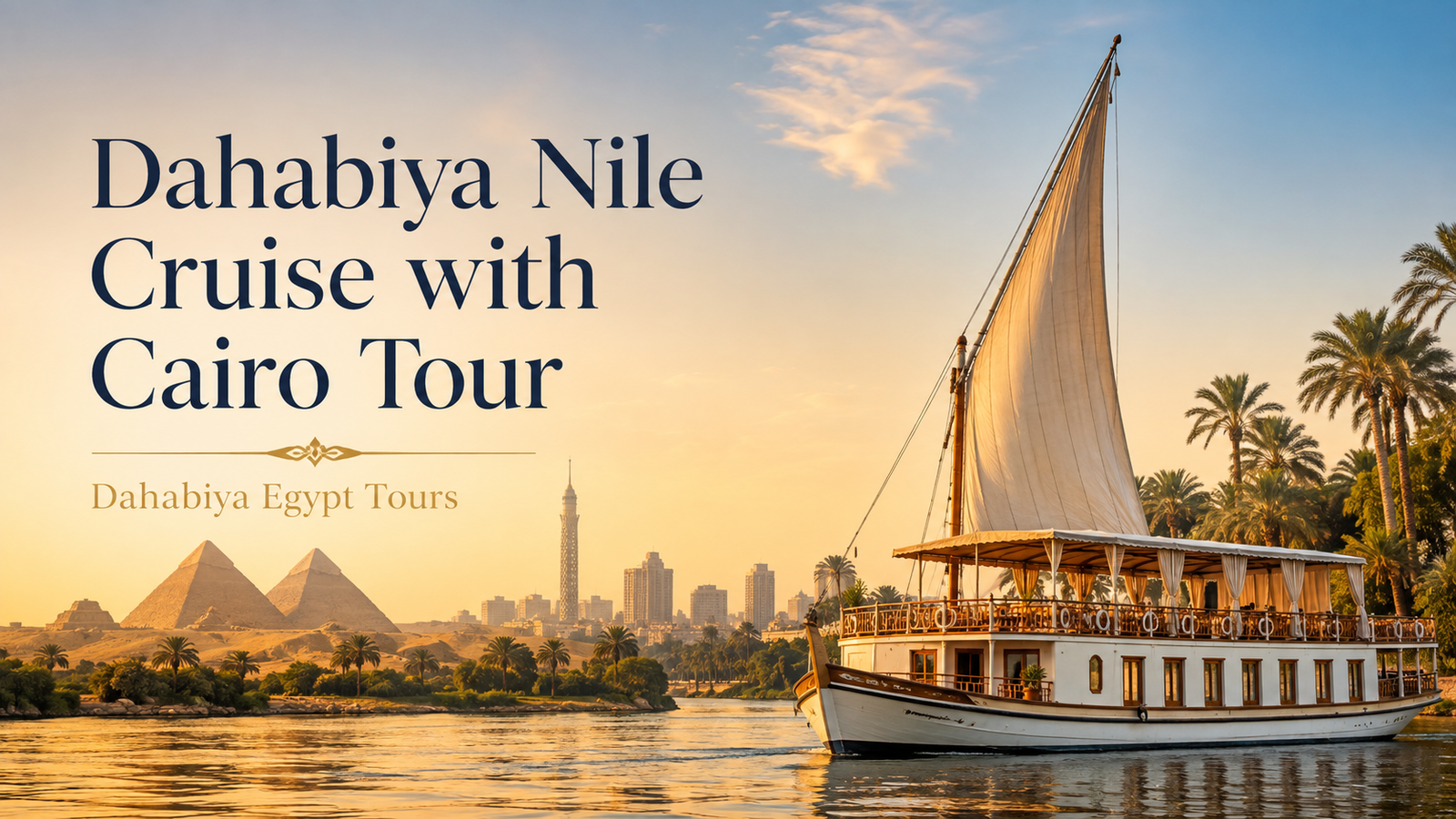
Dahabiya Nile Cruise with Cairo Tour
A Dahabiya Nile cruise with Cairo tour is one of the most rewarding ways to experience Egypt in a single journey. It combines the Pyramids of Giza, Cairo’s museums and historic districts with the temples of Luxor and Aswan and several days of relaxed sailing along the Nile. For European travellers who want archaeology, culture and a slower style of travel without spending their entire holiday in large tour groups, the combination is particularly practical.
Dahabiya Egypt Tours can arrange the journey as a private or tailor-made itinerary, connecting Cairo with a smaller-scale Nile cruise between Luxor and Aswan. The result is a trip that covers Egypt’s essential ancient sites while leaving enough time to appreciate the river, local landscapes and atmosphere rather than simply moving from monument to monument.
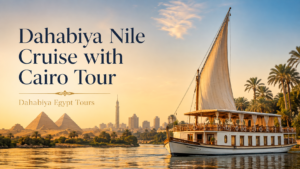
What Is a Dahabiya Nile Cruise with Cairo Tour?
A Dahabiya Nile cruise with Cairo tour combines sightseeing in the Egyptian capital and Giza with a multi-day journey on a traditional-style sailing vessel in Upper Egypt. Most itineraries connect Cairo with Luxor and Aswan using a domestic flight, followed by a Dahabiya cruise in either direction along the Nile.
The Cairo portion normally focuses on ancient Egyptian and historic attractions such as the Giza Pyramids, the Great Sphinx, the Grand Egyptian Museum and, depending on the length of the trip, Saqqara, Islamic Cairo, Coptic Cairo or Khan El Khalili.
The Nile portion explores Upper Egypt. Depending on the sailing route, visits may include Karnak Temple, Luxor Temple, the Valley of the Kings, Edfu, Kom Ombo, Philae Temple and other archaeological sites between Luxor and Aswan.
A Cairo and Dahabiya itinerary gives travellers two complementary views of Egypt: its great monuments on land and the historic Nile landscape that connected many of those civilisations.
Why Combine Cairo with a Dahabiya Nile Cruise?
Combining Cairo with a Dahabiya makes sense because neither destination provides the complete Egyptian experience on its own. Cairo introduces the Old Kingdom pyramids, major museum collections and centuries of Islamic and Coptic history. Luxor and Aswan reveal the temples, royal tombs and river landscapes associated with ancient Upper Egypt.
This combination is especially attractive for European visitors taking one substantial holiday in Egypt. Instead of making separate trips for Cairo and the Nile Valley, the itinerary can connect the main regions efficiently while offering different travel experiences during the same journey.
You Experience More Than Archaeological Sites
A conventional sightseeing trip can become tiring when every day consists of transfers, monuments and hotel changes. A Dahabiya introduces slower periods into the itinerary. Between archaeological visits, travellers can sit on deck, watch palm groves and farmland along the Nile and enjoy the changing scenery between towns.
You See Egypt at Two Different Rhythms
Cairo is energetic, densely populated and full of movement. The Nile south of Luxor offers a contrasting atmosphere. Combining both helps travellers appreciate how diverse Egypt is rather than experiencing only one side of the country.
Dahabiya vs Large Nile Cruise: Which Is Better?
A Dahabiya is generally better suited to travellers who value intimacy, quiet sailing and a smaller number of guests. A conventional Nile cruise ship may be preferable for travellers who prioritise extensive hotel-style facilities, entertainment and larger public spaces.
| Feature | Dahabiya Cruise | Large Nile Cruise Ship |
|---|---|---|
| Atmosphere | Quiet and intimate | Busier and more social |
| Number of guests | Usually limited | Generally much higher |
| Style | Traditional-inspired sailing | Floating hotel experience |
| Facilities | Smaller and more personal | More extensive facilities |
| Best for | Couples, private groups and slow travellers | Travellers wanting resort-style amenities |
| Connection with the Nile | Strong focus on scenery and sailing | Greater focus on onboard facilities and scheduled visits |
There is no universal winner. The right choice depends on your preferred pace, cabin expectations, budget and the amount of personal space you want during the journey.
Suggested Cairo and Dahabiya Nile Cruise Itinerary
A well-balanced combined tour usually needs enough time for at least two days in Cairo plus several days between Luxor and Aswan. Around eight to ten days is a practical starting point for many first-time visitors, although the itinerary can be longer if you want additional museums, Abu Simbel, Alexandria or the Red Sea.
- Arrive in Cairo: Airport transfer, hotel check-in and time to recover from the flight.
- Explore Giza: Visit the Giza Plateau, Pyramids and Great Sphinx, with the option to add Saqqara.
- Discover Cairo: Visit the Grand Egyptian Museum and selected historic districts or markets.
- Fly to Luxor or Aswan: Begin the Upper Egypt section of the journey.
- Board the Dahabiya: Start sailing between Luxor and Aswan according to the chosen direction.
- Explore Nile temples: Visit archaeological sites such as Edfu and Kom Ombo where included in the programme.
- Discover Luxor: Explore Karnak, Luxor Temple, the Valley of the Kings and the West Bank.
- Explore Aswan: Visit sites such as Philae Temple and enjoy the distinctive scenery of the southern Nile.
- Continue or return: Fly to Cairo, connect with an international departure or extend the journey elsewhere in Egypt.
Dahabiya Egypt Tours currently publishes both shorter Aswan-to-Luxor and longer Luxor-to-Aswan Dahabiya programmes, allowing the sailing direction to be selected around the wider itinerary. Its published cruise programmes combine accommodation, guided sightseeing and arranged transfers, although travellers should always confirm the exact inclusions for their selected departure before booking. :contentReference[oaicite:0]{index=0}
What Should You See During the Cairo Tour?
Giza Pyramids and the Great Sphinx
For most first-time visitors, the Giza Plateau is essential. The complex includes the pyramids associated with Khufu, Khafre and Menkaure as well as the Great Sphinx. Allow enough time to explore rather than treating the pyramids as a quick photo stop.
Grand Egyptian Museum
The Grand Egyptian Museum near Giza is a natural addition to a pyramids day or a separate museum-focused day. Its official visitor information currently lists the galleries as open daily, making it a major component of a modern Cairo itinerary. :contentReference[oaicite:1]{index=1}
Historic Cairo
Travellers with an additional day should consider Historic Cairo, where mosques, madrasas, markets and traditional urban neighbourhoods reveal a very different period of Egyptian history. Historic Cairo is recognised by UNESCO for the exceptional survival of its architectural and urban heritage. :contentReference[oaicite:2]{index=2}
Saqqara
Saqqara works particularly well for travellers who want deeper archaeological context. Visiting it before or after Giza helps explain the development of pyramid architecture and introduces a broader landscape of tombs, temples and ancient settlements.
What Will You See on the Dahabiya Cruise?
Luxor and the West Bank
Luxor contains one of the greatest concentrations of ancient monuments in Egypt. Typical sightseeing includes Karnak Temple and Luxor Temple on the East Bank, followed by the Valley of the Kings, the Temple of Hatshepsut and the Colossi of Memnon on the West Bank.
Edfu and Kom Ombo
Edfu and Kom Ombo are among the most important stops on the Nile route. Their temples provide useful historical continuity between the monumental sites of Luxor and the southern landscape around Aswan.
Aswan and Philae Temple
Aswan has a noticeably different character from Luxor. Granite islands, river channels, Nubian cultural influences and the setting of Philae Temple create a slower conclusion or beginning to the journey.
Some itineraries also allow time for optional experiences such as Abu Simbel, a Nubian village visit or a hot-air balloon flight in Luxor. These should be treated as additions rather than assumed inclusions because schedules and prices vary.
What Is Life Like on a Dahabiya Nile Cruise?
Life aboard a Dahabiya is centred on the Nile itself. The vessel is smaller than a conventional cruise ship, so the experience normally feels more like a boutique river journey than a floating resort.
- Relaxed mornings and evenings on deck
- Meals served onboard during sailing days
- Smaller communal spaces
- Guided sightseeing at scheduled archaeological stops
- More emphasis on scenery than entertainment programmes
- A quieter environment for couples and small groups
Facilities vary considerably from one vessel to another. Before booking, ask about cabin size, private bathrooms, air conditioning, Wi-Fi, meal arrangements and how the boat operates when wind conditions are unsuitable for sailing.
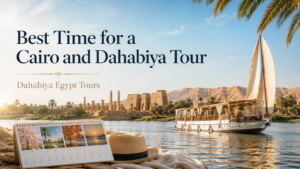
Best Time for a Cairo and Dahabiya Tour
October through April is generally the most comfortable period for extensive sightseeing in Cairo and Upper Egypt because daytime conditions are typically milder than during the hottest part of the year.
Summer travel is still possible, but sightseeing schedules often need to begin earlier in the day. Luxor and Aswan can become particularly hot, so travellers who are sensitive to heat may prefer the cooler months.
Christmas, New Year and popular European holiday periods can have stronger demand. Travellers who want a particular Dahabiya, cabin category or private charter should therefore plan well ahead.
Practical Planning Tips for European Travellers
The easiest itinerary is not always the one with the most attractions. A good Egypt itinerary should minimise unnecessary backtracking and leave realistic time for transfers.
Choose the Cruise Direction Carefully
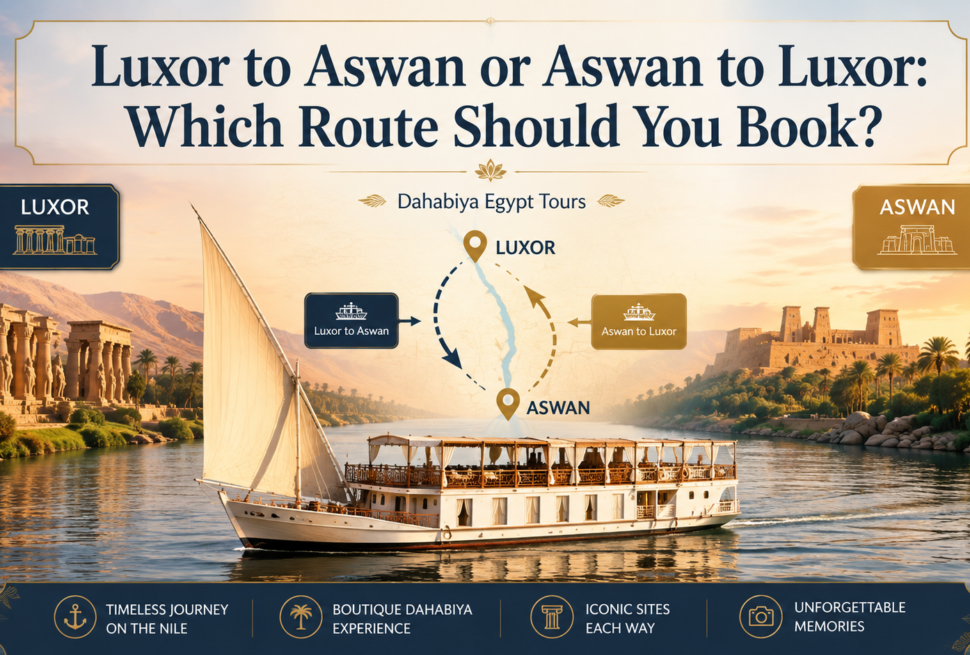
If your international travel plans or next destination are easier from Luxor, an Aswan-to-Luxor sailing can be convenient. If you want to finish in southern Egypt or add Abu Simbel, travelling from Luxor toward Aswan may work better.
Use Domestic Flights Strategically
Flying between Cairo and Upper Egypt is usually the most time-efficient choice for travellers with limited annual leave. Trains are another option, but they require more travel time.
Do Not Overload Cairo
The Pyramids, a major museum and Historic Cairo deserve proper time. Trying to visit every major Cairo attraction in a single day often creates a rushed experience and reduces the value of having a knowledgeable guide.
Confirm What Your Price Includes
Before paying a deposit, request a clear list covering accommodation, meals, entrance fees, transfers, guide services, domestic flights, drinks, tipping and optional excursions. A lower headline price does not necessarily mean a cheaper final trip if many essential services are excluded.
Why Choose Dahabiya Egypt Tours?
Dahabiya Egypt Tours is a locally based Egyptian travel company focused on Dahabiya cruises, private guided tours and tailor-made itineraries. The company states that its services include professional Egyptologist-guided tours, customised travel planning and local assistance across the journey. :contentReference[oaicite:3]{index=3}
This can be particularly useful for a Cairo and Nile itinerary because several separate components have to work together: airport transfers, Cairo sightseeing, hotel nights, domestic connections, cruise embarkation and guided visits in Upper Egypt. see also.
Instead of treating each part as an unrelated booking, Dahabiya Egypt Tours can build the trip around the traveller’s dates, preferred sailing direction, sightseeing priorities and budget. The company also publishes Dahabiya routes in both directions between Luxor and Aswan, which gives travellers more flexibility when connecting the cruise with Cairo. :contentReference[oaicite:4]{index=4}
How to Choose the Right Dahabiya and Cairo Package
Before making a decision, compare the complete experience rather than choosing only by price.
- Check the exact vessel: Ask for cabin information and recent photographs.
- Confirm the itinerary: Identify which temples, museums and archaeological sites are included.
- Check guide arrangements: Determine whether sightseeing is private or shared.
- Review entrance fees: Ask which tickets are included and which require supplements.
- Confirm meals and drinks: Dahabiya meal plans vary.
- Ask about transfers: Confirm airport, hotel and cruise-port transportation.
- Review cancellation terms: Understand deposit and cancellation conditions before payment.
- Allow free time: Avoid an itinerary in which every hour is scheduled.
Common Mistakes to Avoid
One common mistake is assuming every Dahabiya offers the same standard. Vessels differ in cabin design, service style, passenger capacity and operating arrangements.
Another mistake is choosing a package solely because it lists the greatest number of attractions. Egypt’s archaeological sites are large and detailed. Seeing fewer places properly is often more satisfying than spending each day racing between entrances.
Travellers should also avoid booking international flights too close to the end of a river itinerary. Transport schedules and operating conditions can change, so sensible connection time is valuable.
Finally, never assume optional activities are included. Abu Simbel, special tomb tickets, hot-air ballooning and private experiences may involve separate charges.
Is a Dahabiya Nile Cruise with Cairo Tour Worth It?
For travellers interested in both ancient Egyptian history and slow travel, a Dahabiya Nile cruise with Cairo tour offers an unusually complete introduction to Egypt. Cairo provides the pyramids, museums and historic city, while Luxor and Aswan bring travellers into the heart of the Nile Valley and its temples, tombs and landscapes.
The Dahabiya makes the difference in pace. Instead of treating the Nile simply as transport between archaeological sites, the river becomes part of the travel experience.
For European visitors with roughly a week and a half available, the combination can create a balanced journey with major monuments, private guiding, atmospheric sailing and enough variety to prevent the itinerary from feeling repetitive.
Plan Your Cairo and Dahabiya Journey
The most effective itinerary depends on your travel dates, preferred cruise direction, number of nights, international flight schedule and the sites you most want to explore.
Contact Dahabiya Egypt Tours with your proposed dates, number of travellers and preferred trip length. The team can then help you compare Cairo sightseeing options and Dahabiya routes between Luxor and Aswan so that the entire journey works as one coherent Egypt itinerary rather than a collection of separate bookings.
Frequently Asked Questions About Dahabiya Nile Cruises with Cairo Tours
1. What is a Dahabiya Nile cruise with Cairo tour?
It is a combined Egypt itinerary featuring sightseeing in Cairo and Giza followed by a small-boat Nile cruise between Luxor and Aswan.
2. How many days do I need for Cairo and a Dahabiya cruise?
About eight to ten days works well for many first-time visitors, although longer itineraries allow more time for Cairo, Abu Simbel or other destinations.
3. Is a Dahabiya better than a regular Nile cruise?
A Dahabiya is usually better for travellers wanting a smaller, quieter and more intimate experience. Large cruise ships generally offer more extensive facilities.
4. Does a Dahabiya sail from Cairo to Luxor?
Normally no. Dahabiya cruises operate in Upper Egypt, commonly between Luxor and Aswan. Travellers usually connect from Cairo by domestic flight or train.
5. Can I visit the Pyramids before the Nile cruise?
Yes. A common itinerary starts with Cairo and the Giza Pyramids before travelling to Luxor or Aswan to board the Dahabiya.
6. What are the main stops on a Dahabiya cruise?
Typical routes may include Luxor, Esna, Edfu, Kom Ombo and Aswan, although exact stops depend on the selected itinerary.
7. Is Abu Simbel included?
Not always. Abu Simbel is often offered as an optional excursion from Aswan, so confirm it before booking.
8. What is the best month for a Dahabiya Nile cruise?
The period from October to April is generally preferred for milder sightseeing conditions, while summer can be considerably hotter in Upper Egypt.
9. Are Dahabiya cruises suitable for couples?
Yes. Their quiet atmosphere, smaller size and relaxed sailing style make Dahabiyas particularly attractive to couples and honeymoon travellers.
10. Can Dahabiya Egypt Tours customise the itinerary?
Yes. The company offers tailor-made Egypt travel planning, allowing Cairo sightseeing, cruise direction, trip duration and additional destinations to be arranged around individual requirements. :contentReference[oaicite:5]{index=5}