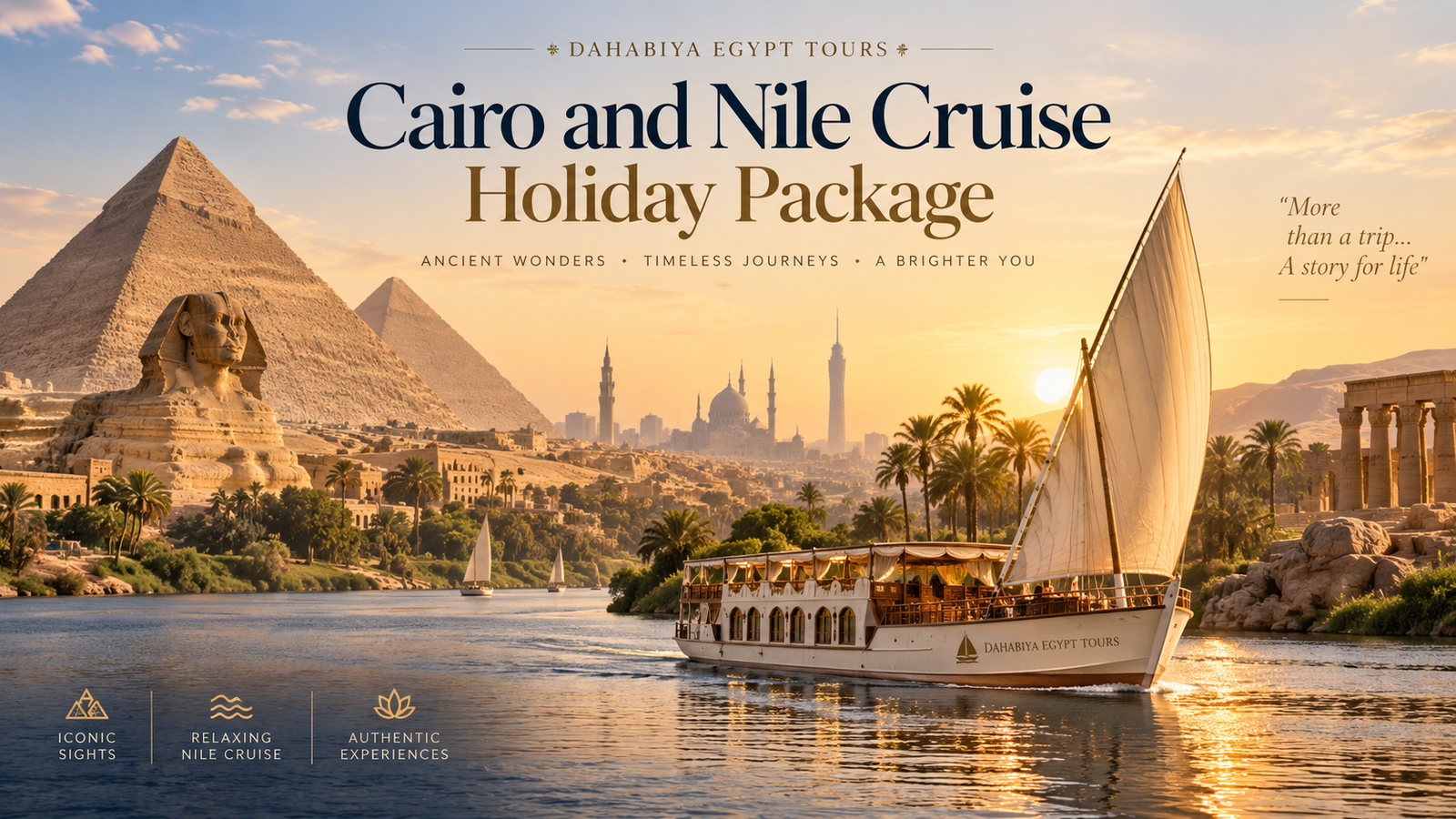
Cairo and Nile Cruise Holiday Package
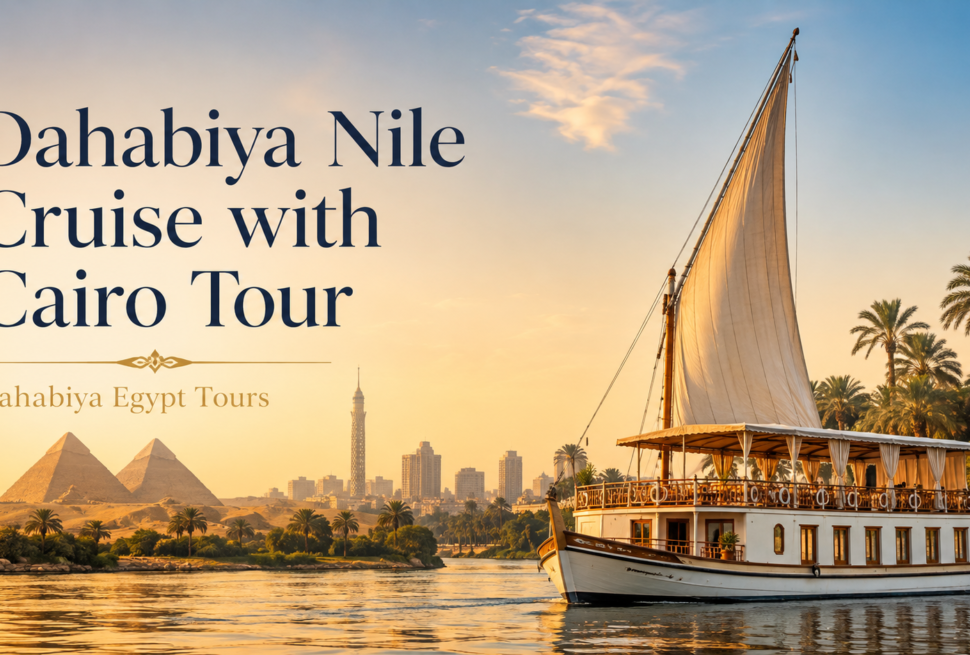
A Cairo and Nile cruise holiday package is one of the most complete ways to experience Egypt in a single journey. It combines the Pyramids of Giza, Cairo’s museums and historic districts with the temples, tombs and river landscapes of Luxor and Aswan. For European travellers who want to see Egypt’s essential highlights without arranging every hotel, transfer, domestic journey and excursion separately, a well-planned package can make the trip considerably easier. Dahabiya Egypt Tours can help travellers build a balanced itinerary that brings Cairo and the Nile together without making the holiday feel rushed.
What Is a Cairo and Nile Cruise Holiday Package?
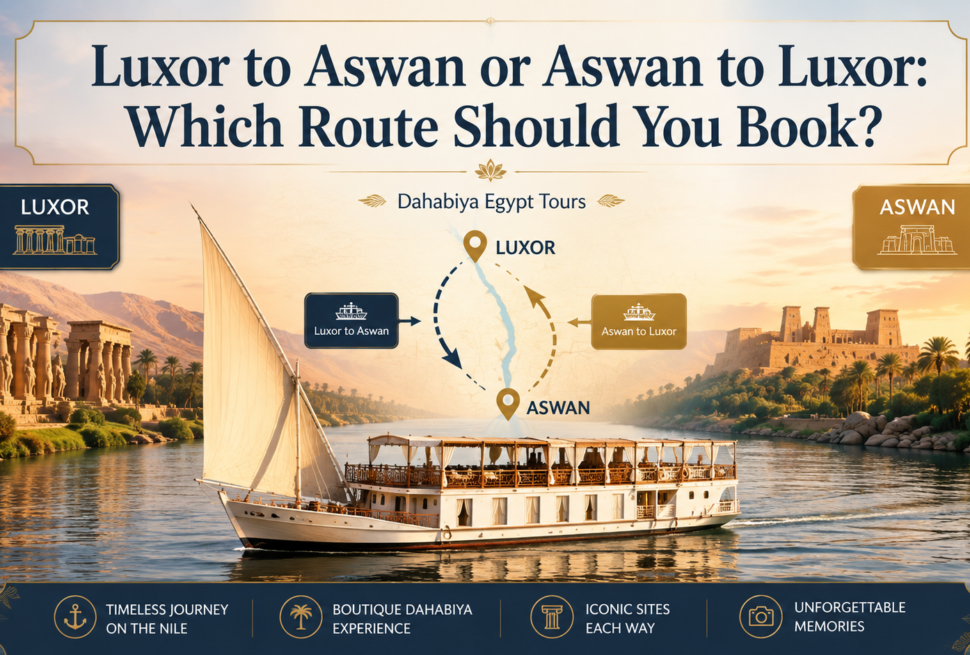
A Cairo and Nile cruise holiday combines a stay in Egypt’s capital with a multi-day journey along the Nile, usually between Luxor and Aswan or in the opposite direction. It is particularly suitable for first-time visitors because it connects many of Egypt’s most important archaeological sites within one organised itinerary.
In Cairo and Giza, travellers can focus on the Pyramids of Giza, the Great Sphinx, major museums and selected areas of historic Cairo. The journey then continues south to Luxor or Aswan, where the Nile cruise becomes both transportation and accommodation while travellers explore the temples and archaeological sites of Upper Egypt.
A typical package may include:
- Hotel accommodation in Cairo.
- A Nile cruise between Luxor and Aswan.
- Airport, hotel and cruise transfers.
- Domestic transportation or flights where specified.
- Guided sightseeing in Cairo and Upper Egypt.
- Visits to temples, tombs and archaeological sites according to the itinerary.
- Meals aboard the cruise according to the selected board basis.
Exact inclusions vary, so travellers should always check the detailed itinerary before booking rather than assuming that entrance tickets, optional excursions, drinks, gratuities or international flights are included.
Why Combine Cairo with a Nile Cruise?
Combining Cairo and the Nile allows you to understand Egyptian history in a much more connected way. Cairo introduces the pyramids, royal monuments and museum collections, while Luxor, Edfu, Kom Ombo and Aswan reveal the temples, tombs and landscapes associated with later periods of ancient Egyptian civilisation.
For European visitors, the combination is also practical. Instead of taking several separate holidays to see Egypt’s major cultural destinations, you can connect the country’s main archaeological regions in one structured journey.
See Egypt’s Most Recognisable Ancient Sites
Cairo gives travellers access to the Giza Plateau and the monuments surrounding the Pyramids and Sphinx. A journey through Upper Egypt adds extraordinary locations such as Karnak, Luxor’s West Bank, Edfu, Kom Ombo and Philae.
Travel Between Historic Sites Without Constant Hotel Changes
One of the strongest advantages of a Nile cruise is convenience. Your cabin travels with you, reducing the need to pack and unpack each time you move between destinations. During sailing periods, you can relax on deck while the landscape changes around you.
Balance Sightseeing with Relaxation
Egypt can involve intensive sightseeing, especially when several archaeological sites are included. A cruise naturally introduces quieter periods between visits, making the overall itinerary more comfortable than a holiday based entirely on road transfers and daily hotel changes.
What Can You See in Cairo?
Cairo and neighbouring Giza provide the opening chapter of most Egypt cultural holidays. Allowing at least two or three sightseeing days gives travellers a better chance to explore without turning every day into a race between attractions.
The Pyramids of Giza and the Great Sphinx
The Giza Plateau is normally the priority for first-time visitors. The complex includes the pyramids associated with Khufu, Khafre and Menkaure, together with the Great Sphinx and other ancient structures. A guided visit helps put the monuments into historical context instead of treating the site only as a photography stop.
Cairo’s Major Museums
A carefully planned Cairo itinerary should include time for one of the city’s major collections of ancient Egyptian artefacts. Museum visits work particularly well when scheduled before travelling south because they provide useful historical context for the temples and tombs encountered later in Luxor and Aswan.
Historic Cairo
If your schedule allows, consider adding Islamic Cairo, Coptic Cairo or a traditional market area. These districts reveal a very different side of the capital and help visitors see Cairo as a living city rather than simply a gateway to ancient monuments.
What Happens on a Nile Cruise from Luxor to Aswan?
A Nile cruise between Luxor and Aswan combines sightseeing with river travel through Upper Egypt. Most itineraries include important archaeological sites in and around Luxor, followed by stops near Edfu and Kom Ombo before reaching Aswan, although exact schedules depend on the vessel and cruise programme.
| Destination | Typical Highlights | Why It Matters |
|---|---|---|
| Luxor | Karnak, Luxor Temple, Valley of the Kings | One of Egypt’s richest areas for temples and royal tombs |
| Edfu | Temple of Horus | A remarkably preserved ancient temple complex |
| Kom Ombo | Temple of Kom Ombo | A distinctive riverside temple with an unusual dual dedication |
| Aswan | Philae, Nile islands and Nubian landscapes | A relaxed southern destination combining archaeology and scenery |
Luxor and the Valley of the Kings
Luxor deserves substantial time rather than a short arrival-and-departure stop. On the East Bank, Karnak and Luxor Temple are major highlights. Across the Nile, the West Bank contains royal tombs, memorial temples and archaeological landscapes including the Valley of the Kings.
Edfu and Kom Ombo
Edfu and Kom Ombo are particularly well suited to a river itinerary because the cruise allows travellers to reach both locations while continuing naturally between Luxor and Aswan. They add depth to the journey and prevent the holiday from becoming focused only on Cairo and Luxor.
Aswan and Philae
Aswan feels noticeably calmer than Cairo and Luxor. The Nile widens around islands and granite outcrops, creating one of the most distinctive landscapes in southern Egypt. Philae Temple is a major archaeological highlight, while additional experiences can be arranged depending on the available time.
How Many Days Do You Need for Cairo and a Nile Cruise?
For most first-time visitors, around 8 to 10 days provides a comfortable framework for Cairo, Luxor, Aswan and a Nile cruise. Shorter trips are possible, but they usually require tighter schedules and less free time.
A balanced itinerary might follow this structure:
- Day 1: Arrive in Cairo and settle into the hotel.
- Day 2: Explore the Pyramids of Giza and the Sphinx.
- Day 3: Visit a major museum and selected Cairo attractions.
- Day 4: Travel to Luxor and begin Upper Egypt sightseeing.
- Day 5: Explore Luxor’s major temples and West Bank monuments.
- Days 6-7: Sail the Nile with visits around Edfu and Kom Ombo.
- Day 8: Explore Aswan and Philae.
- Days 9-10: Add extra sightseeing, return to Cairo or connect with your international flight.
This is an example rather than a fixed programme. Cruise sailing days, domestic transport and international arrival times should determine the final itinerary.
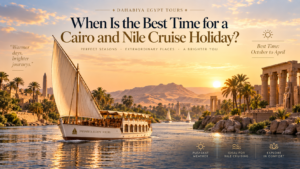
When Is the Best Time for a Cairo and Nile Cruise Holiday?
Many European travellers prefer visiting between autumn and spring because temperatures are generally more comfortable for outdoor sightseeing than during the hottest summer months.
Upper Egypt, particularly Luxor and Aswan, can become very hot in summer. Travelling during warmer periods can still be practical, but early sightseeing, suitable clothing, hydration and realistic pacing become more important.
Holiday periods can also affect availability. If you are travelling during Christmas, New Year, Easter or common European school holidays, planning well ahead can give you a wider choice of hotels, cruise cabins and domestic connections.
Standard Nile Cruise or Dahabiya: Which Should You Choose?
The right vessel depends on how you prefer to travel. A conventional Nile cruise ship normally provides more hotel-style facilities and carries more passengers. A dahabiya offers a smaller-scale sailing experience with a more intimate atmosphere.
| Feature | Standard Nile Cruise | Dahabiya |
|---|---|---|
| Atmosphere | Hotel-style river cruise | Smaller and more intimate |
| Passenger numbers | Generally higher | Generally lower |
| Facilities | Usually broader onboard facilities | More focused on atmosphere and sailing |
| Travel style | Suitable for classic cruise travellers | Suitable for slower, quieter travel |
If privacy, quiet river scenery and a smaller vessel are priorities, ask about dahabiya options. If you prefer extensive onboard facilities and a conventional cruise format, a larger vessel may suit you better.
Why Book a Cairo and Nile Cruise Package Instead of Planning Everything Separately?
A package is most useful when it solves the logistical gaps between destinations. Cairo, Luxor and Aswan are not neighbouring sightseeing districts; they require coordinated transport, accommodation, guides and cruise embarkation times. see also.
A properly organised package can bring these elements together under one itinerary. This is especially valuable for travellers arriving from the UK, France, Germany, Italy, Spain, the Netherlands and other European markets who may have limited annual holiday time and want predictable travel arrangements.
The best Egypt itinerary is not the one with the largest number of attractions. It is the one that connects the right places at a pace that still allows you to enjoy them.
Why Consider Dahabiya Egypt Tours?
Travellers considering a Cairo and Nile cruise holiday often benefit from working with an Egypt-focused tour specialist rather than combining unrelated bookings from multiple suppliers. Dahabiya Egypt Tours can be a natural point of contact when planning a journey that links Cairo with Luxor, Aswan and a Nile sailing experience.
When discussing your holiday with Dahabiya Egypt Tours, focus on the details that genuinely affect the quality of the trip: the number of nights in Cairo, cruise category, cabin type, sightseeing pace, private or shared guiding, domestic transport and the attractions included in the quoted programme.
A useful travel company should make these details clear before booking. The objective is not simply to purchase a cruise cabin; it is to build a coherent Egypt holiday from your arrival until your departure.
What Should You Check Before Booking?
Before confirming any Egypt holiday package, compare the complete itinerary rather than comparing the headline price alone.
- Check the exact number of hotel and cruise nights.
- Confirm whether airport and intercity transfers are included.
- Ask whether domestic flights or train journeys are part of the package.
- Verify which archaeological entrance fees are included.
- Check whether sightseeing is private or shared.
- Ask which meals and drinks are included aboard the cruise.
- Confirm the cruise route and embarkation city.
- Ask about optional excursions before arrival.
- Check baggage allowances if domestic flights are involved.
- Review cancellation and amendment terms before payment.
Common Mistakes to Avoid When Planning an Egypt Nile Cruise Holiday
Trying to See Too Much in Too Little Time
A six-day itinerary cannot comfortably provide the same experience as a ten-day holiday. Leaving some breathing space usually improves the trip more than adding another rushed attraction.
Choosing a Package Only by Price
Two packages with similar titles may include very different hotels, cruise categories, guiding arrangements, entrance fees and transfers. Compare what is actually included.
Ignoring Arrival and Departure Logistics
International flight times should work with your domestic connections and cruise schedule. Allow sensible transfer margins rather than building an itinerary that depends on every connection operating perfectly.
Assuming Every Nile Cruise Is the Same
Vessel size, cabin standards, onboard atmosphere and itinerary style vary. Decide whether you want a conventional cruise ship, a smaller dahabiya or another sailing experience before you book.
Leaving Essential Questions Until Arrival
Ask about guides, meals, entrance fees, optional excursions and transfers in advance. Clear expectations make the holiday much easier to enjoy.
Is a Cairo and Nile Cruise Package Worth It for First-Time Visitors?
Yes, it can be an excellent format for a first trip to Egypt because it combines the country’s best-known ancient sites with a practical route through Cairo and Upper Egypt.
The experience is particularly suitable for travellers interested in archaeology, history, photography and cultural travel. Couples, solo travellers, families and mature travellers can all enjoy the route, although the pace, hotel standard and cruise style should be adjusted to individual needs.
Rather than treating Cairo, Luxor and Aswan as separate destinations, the package creates a continuous journey through different periods and landscapes of Egyptian history.
Plan Your Cairo and Nile Cruise Holiday with Confidence
A successful Cairo and Nile cruise holiday package should give you three things: enough time in Cairo, a well-organised route through Upper Egypt and enough space in the schedule to enjoy the Nile itself. The Pyramids, Luxor’s temples and tombs, Edfu, Kom Ombo and Aswan each deserve more than a hurried photograph.
For European travellers planning a first or return visit to Egypt, combining these destinations offers a practical way to experience the country’s archaeological highlights while keeping accommodation and transport manageable.
If you are ready to start planning, contact Dahabiya Egypt Tours with your preferred travel dates, number of travellers, desired hotel category and preferred cruise style. From there, you can build an itinerary around your available time and the experiences that matter most to you.
Frequently Asked Questions About Cairo and Nile Cruise Holidays
1. What is a Cairo and Nile cruise holiday package?
It is a combined Egypt itinerary that includes time in Cairo and a Nile cruise through Upper Egypt, usually connecting Luxor and Aswan.
2. How many days do I need for Cairo and a Nile cruise?
Around 8 to 10 days works well for many first-time visitors, although longer itineraries allow a slower pace and additional sightseeing.
3. Where do Nile cruises usually start?
Most classic itineraries operate between Luxor and Aswan, with cruises travelling in either direction depending on the schedule.
4. What attractions can I see during the cruise?
Common highlights include Luxor’s temples and West Bank, Edfu Temple, Kom Ombo Temple and attractions in Aswan such as Philae.
5. Is Cairo included in a standard Nile cruise?
No. Cairo is geographically separate from the main Luxor-Aswan cruise route, which is why combined Cairo and Nile cruise packages arrange both parts of the holiday.
6. Is a Nile cruise suitable for first-time visitors to Egypt?
Yes. It provides a convenient way to visit several major archaeological sites while using the cruise vessel as your accommodation between destinations.
7. What is the difference between a Nile cruise and a dahabiya?
A standard Nile cruise is generally a larger vessel with more hotel-style facilities, while a dahabiya provides a smaller and more intimate sailing experience.
8. When is the best season for a Nile cruise in Egypt?
Autumn through spring is popular with European visitors because outdoor sightseeing is generally more comfortable than during the hottest summer period.
9. Are flights to Egypt included in Cairo and Nile cruise packages?
International flights are not automatically included. Always check the specific package details, as inclusions vary between itineraries.
10. How can I book with Dahabiya Egypt Tours?
Contact Dahabiya Egypt Tours with your travel dates, group size, preferred accommodation level and cruise style so the itinerary can be discussed before confirmation.