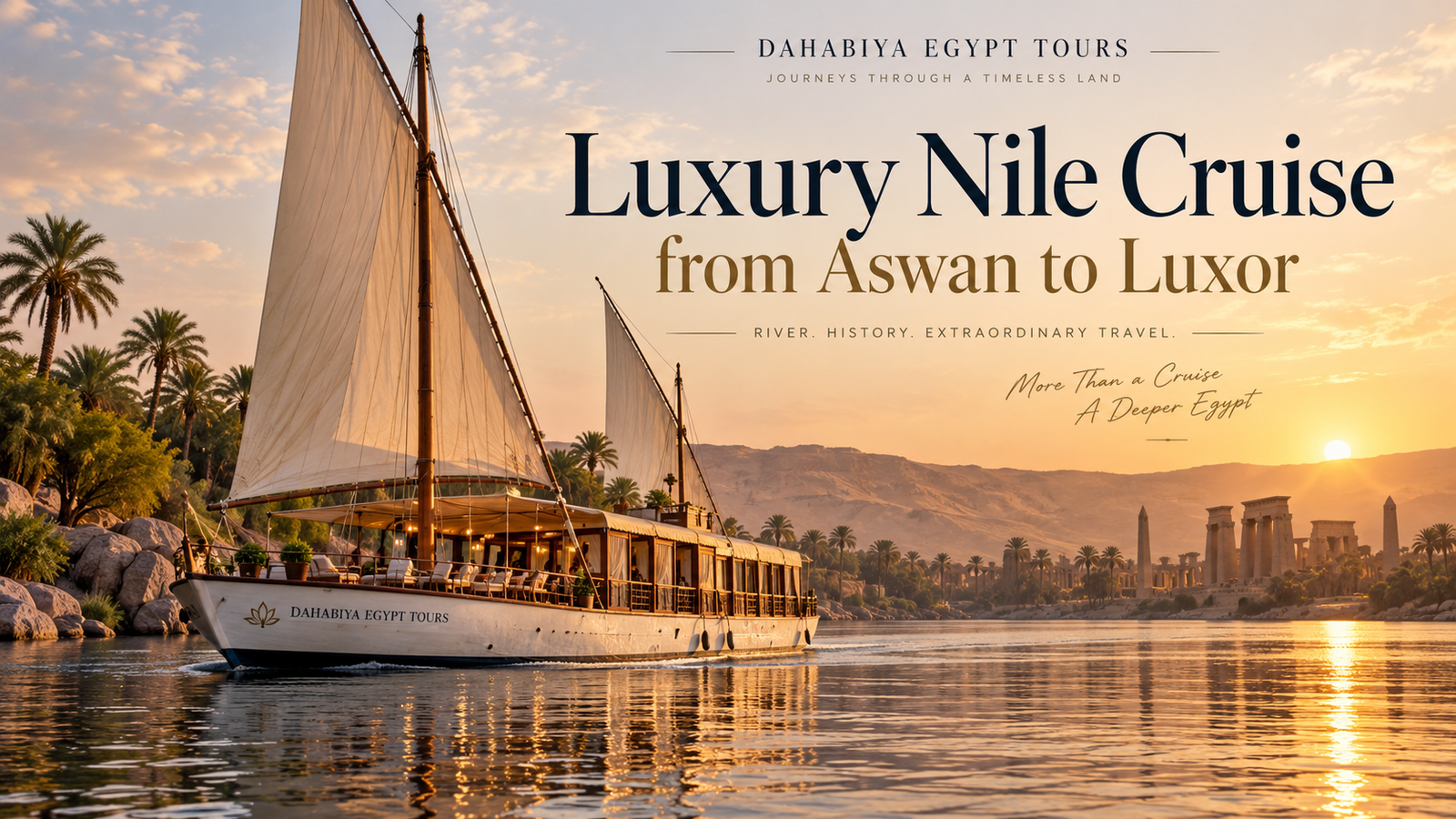
Luxury Nile Cruise from Aswan to Luxor
A luxury Nile cruise from Aswan to Luxor is one of the most rewarding ways to explore Upper Egypt. Instead of moving quickly between archaeological sites by road, travelers can follow the Nile north from Aswan toward Luxor while combining historic temples, peaceful river scenery, comfortable accommodation, and time to slow down between excursions.
For travelers from the United States who want a more personal alternative to a large cruise ship, a Dahabiya-style journey can be especially appealing. Dahabiya Egypt Tours helps travelers experience this historic route with an emphasis on thoughtful planning, comfort, cultural discovery, and a more relaxed way of seeing the Nile.
What Is a Luxury Nile Cruise from Aswan to Luxor?
A luxury Nile cruise from Aswan to Luxor is a northbound journey along the Nile River through Upper Egypt. The experience usually combines accommodation on board, meals, sightseeing excursions, and opportunities to visit archaeological sites located along or near the river.
The route begins in Aswan, one of Egypt’s most atmospheric southern cities, and finishes in Luxor, home to the monumental remains of ancient Thebes. Between the two cities lie temples and communities that help travelers understand Egyptian history beyond the country’s most famous landmarks.
The word luxury should mean more than decorative cabins. On a well-planned Nile journey, luxury is also about space, timing, service, knowledgeable guiding, comfortable transfers, good meals, and having enough time to appreciate each destination without feeling rushed.
Why Sail from Aswan to Luxor?
Sailing from Aswan to Luxor means traveling north with the natural direction of the Nile. It creates a memorable progression from the granite landscapes and Nubian character of Aswan toward the temples and royal necropolises of Luxor.
For many travelers, this direction also works naturally within a broader Egypt itinerary. A trip can begin in Cairo, continue by domestic flight or train to Aswan, follow the Nile to Luxor, and then connect with another Egyptian destination or the journey home.
A More Relaxed Way to Experience Upper Egypt
One of the greatest benefits of a Nile cruise is avoiding the need to pack and unpack every day. Your accommodation moves with you while the scenery changes outside. Palm groves, agricultural land, desert cliffs, islands, fishing boats, and villages create a landscape that is very different from traveling the same region entirely by road.
History Becomes Part of the Journey
The Nile was central to ancient Egyptian civilization. Traveling along the river provides geographical context for the temples, settlements, farmland, and religious centers that developed around it. Sites that may feel disconnected on a conventional itinerary become part of one continuous story.
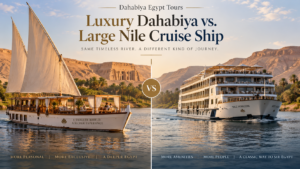
Luxury Dahabiya vs. Large Nile Cruise Ship
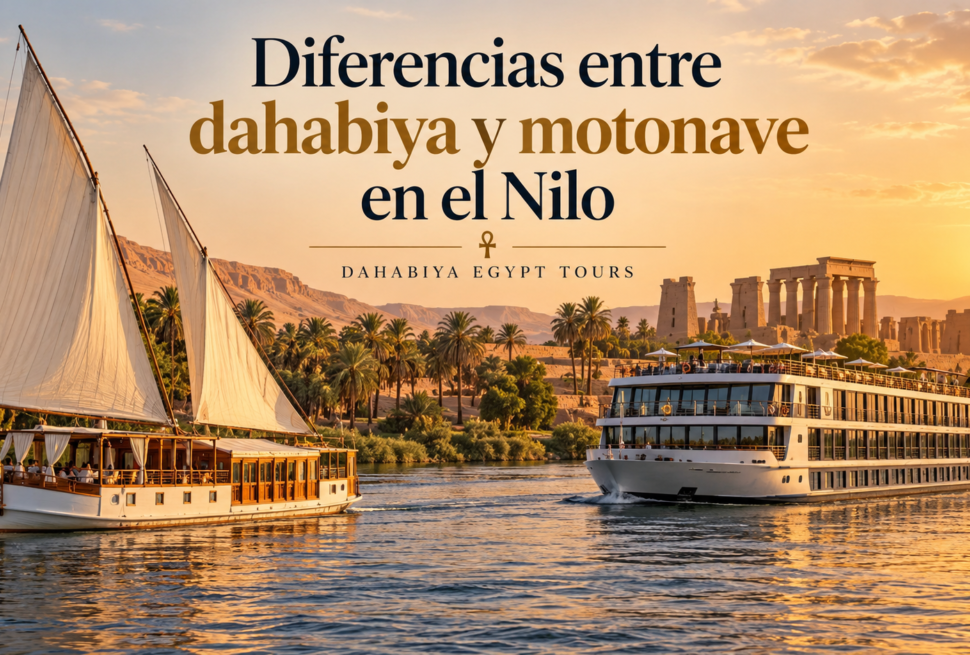
A Dahabiya is generally chosen by travelers who value intimacy, atmosphere, and a slower style of travel. Larger Nile cruise vessels can provide more extensive facilities, while smaller boats usually focus on a quieter onboard experience.
| Feature | Luxury Dahabiya | Large Nile Cruise Ship |
|---|---|---|
| Atmosphere | Intimate and relaxed | Busier and more social |
| Passenger numbers | Usually smaller | Usually considerably larger |
| Onboard experience | Focused on the river and open-air relaxation | Often includes more hotel-style facilities |
| Itinerary style | Can feel slower and more personalized | Generally follows structured cruise schedules |
| Best suited to | Couples, families, private groups, and slow travelers | Travelers who prefer a larger resort-style vessel |
Neither format is automatically better. The right choice depends on what you expect from the trip. If peaceful sailing, smaller-scale hospitality, and an intimate connection with the Nile matter more than extensive onboard entertainment, a luxury Dahabiya cruise deserves serious consideration.
What Can You See Between Aswan and Luxor?
The Aswan-to-Luxor corridor contains an exceptional concentration of archaeological sites. Exact inclusions vary by itinerary, so travelers should always confirm their final program before booking.
Aswan and Philae
Aswan offers a distinctive combination of Nile islands, granite landscapes, Nubian heritage, and ancient monuments. One of its most celebrated archaeological sites is the Philae temple complex, whose principal sanctuary was dedicated to Isis.
A well-paced itinerary may allow time to explore Aswan before sailing rather than treating the city simply as a departure point.
Kom Ombo Temple
Kom Ombo stands directly beside the Nile and is unusual because of its double design. The temple was associated with two principal deities, Sobek and Harwer, or Horus the Elder. Its riverside setting makes it one of the route’s most memorable stops.
Edfu Temple
Edfu is known for its impressive Temple of Horus. Its monumental architecture and extensive inscriptions make it an important stop for travelers who want to understand the religious world of ancient Egypt rather than simply photograph temple façades.
Esna and the Nile Valley
Esna provides another layer of the journey, connecting archaeological heritage with the life of a modern Nile town. Depending on the cruise program and navigation schedule, the wider river corridor can also offer opportunities to observe quieter landscapes away from Egypt’s busiest visitor attractions.
Luxor and the West Bank
Luxor is one of the world’s great archaeological destinations. The ancient city of Thebes extended across both sides of the Nile, with monumental temples on the east bank and major funerary sites on the west.
Important highlights include Karnak Temple, Luxor Temple, the Valley of the Kings, the Temple of Hatshepsut, and other monuments of the Theban landscape. The Valley of the Kings served as a royal burial area during Egypt’s New Kingdom and contains dozens of known tombs.
What Does a Good Aswan-to-Luxor Cruise Itinerary Look Like?
A good itinerary balances sightseeing with actual time on the Nile. Booking a beautiful boat has little value if every day feels like a race between monuments.
A practical journey normally follows this general sequence:
- Arrive in Aswan: Settle in and explore key attractions according to your chosen program.
- Begin sailing north: Enjoy time on deck as the urban scenery gives way to villages, fields, and desert landscapes.
- Visit Kom Ombo: Explore the distinctive riverside temple complex.
- Continue toward Edfu: Visit the Temple of Horus and return to the river.
- Pass through the Esna area: Experience another section of the Nile Valley as the cruise approaches Luxor.
- Finish in Luxor: Explore the east-bank temples and west-bank archaeological sites according to your schedule.
The exact order and timing can change because river navigation, local arrangements, archaeological-site schedules, and the selected cruise program all influence the journey. Travelers should therefore focus on the quality and pacing of the itinerary rather than choosing a cruise solely by the number of stops listed.
Why This Journey Appeals to Travelers from the United States
For American travelers, a Nile cruise can simplify one of the most culturally dense portions of an Egypt vacation. Rather than arranging separate hotels, drivers, guides, meals, and transfers between Aswan, Edfu, and Luxor, a well-organized cruise brings many parts of the journey into one coordinated itinerary.
It also works well for travelers who have already flown a long distance to reach Egypt and do not want to spend the entire vacation changing hotels or sitting in vehicles. Once aboard, the river itself becomes part of the experience.
Before departure from the United States, travelers should check current passport, visa, health, insurance, airline, and security guidance from official sources. Entry rules and travel conditions can change, so current government information should take priority over older travel blogs.
What Makes a Nile Cruise Feel Truly Luxurious?
True luxury on the Nile is usually found in details that improve the entire journey rather than a single impressive feature.
- Comfortable, well-maintained cabins
- Clean private bathrooms
- Attentive but unobtrusive service
- Quality meals with clearly explained inclusions
- Shaded outdoor spaces for river views
- A well-planned sightseeing schedule
- A knowledgeable Egyptologist guide
- Reliable transfers between the boat and archaeological sites
- Reasonable time at major monuments
- Clear communication before arrival
When comparing cruises, ask what the experience feels like from morning to evening. Cabin size matters, but so do departure times, guiding quality, dining arrangements, noise levels, group size, and how much uninterrupted sailing time is built into the program.
When Is the Best Time for a Nile Cruise?
The most comfortable period for many international visitors is during Egypt’s cooler months, when sightseeing outdoors in Aswan and Luxor is generally easier. Winter is particularly popular, so desirable cabins and preferred sailing dates may require earlier planning.
Travel during warmer months can still be rewarding, particularly for visitors comfortable with high temperatures. The advantage may be a different crowd pattern, but midday archaeological visits require more attention to hydration, sun protection, and pacing. see also.
Rather than choosing dates solely by price, consider your personal tolerance for heat, school or work schedules, availability of your preferred boat, and the rest of your Egypt itinerary.
How to Choose the Right Luxury Nile Cruise
Do not select a cruise based only on photographs. Ask detailed questions about what is actually included and how the itinerary operates.
1. Confirm the Boat Type
Ask whether you are booking a traditional-style Dahabiya, a larger motor vessel, or another type of Nile boat. These experiences can be very different.
2. Request the Day-by-Day Itinerary
Look for a clear program showing embarkation, sightseeing, sailing, meals, overnight locations, and disembarkation. Pay attention to how much free time is available.
3. Check What the Price Includes
Confirm accommodation, meals, guiding, entrance fees, transfers, beverages, optional excursions, gratuities, and any services that require additional payment.
4. Ask About the Guide
A knowledgeable Egyptologist can transform a temple visit from a walk through impressive ruins into a coherent explanation of Egyptian religion, kingship, architecture, and daily life.
5. Understand Cabin Arrangements
Ask about bed configuration, bathroom facilities, air conditioning, windows, storage, and cabin location. Travelers who sleep lightly should also ask about potential engine, generator, or docking noise.
Why Consider Dahabiya Egypt Tours?
Dahabiya Egypt Tours is a natural option for travelers specifically searching for an Aswan-to-Luxor journey built around Nile cruising and Egypt’s archaeological heritage. Working with a specialist can make it easier to coordinate the cruise with sightseeing in Aswan and Luxor and with a broader Egyptian vacation.
The most useful planning process is personalized. A couple celebrating an anniversary may prioritize privacy and a relaxed schedule, while a family may need flexible room arrangements and an itinerary suitable for different ages. History-focused travelers may prefer additional archaeological time, while first-time visitors may want a balanced introduction.
When contacting Dahabiya Egypt Tours, share your travel dates, number of travelers, preferred cruise style, accommodation expectations, and any places you consider essential. That information makes it easier to build an itinerary around your actual priorities rather than simply choosing a generic package.
Practical Tips Before Booking
- Leave some flexibility: River travel can be affected by operational conditions and local schedules.
- Arrive before embarkation day when possible: A buffer can reduce stress if an international or domestic flight changes.
- Pack for temples as well as the boat: Comfortable walking shoes, breathable clothing, sun protection, and a light layer can all be useful.
- Check electrical compatibility: American travelers should verify that their devices support the local voltage and bring an appropriate plug adapter when necessary.
- Keep essential medication with you: Do not place everything you may need immediately in checked luggage.
- Consider travel insurance: Review medical coverage, cancellation terms, delays, and interruption protection before purchasing.
- Confirm optional excursions in advance: If Abu Simbel, additional tombs, or other experiences matter to you, clarify timing and cost before finalizing the booking.
Common Mistakes to Avoid When Booking a Nile Cruise
Choosing Only by Price
A lower fare may exclude services that another itinerary includes. Compare the complete experience rather than the headline price.
Assuming Every Cruise Visits the Same Places
Routes may look similar online, but sightseeing inclusions, guiding arrangements, sailing time, and optional excursions can differ considerably.
Booking Too Tight a Flight Connection
A cruise is part of a larger transportation chain. Avoid building an itinerary that depends on every flight and transfer operating with no margin for delay.
Ignoring the Size of the Vessel
Travelers sometimes use “Nile cruise” and “Dahabiya cruise” as interchangeable terms. Confirm the boat style before paying a deposit if a small-vessel experience is important to you.
Trying to See Everything
Egypt rewards slower travel. A schedule overloaded with temples, tombs, flights, and early departures can leave little time to enjoy the Nile itself. Prioritize the experiences that matter most.
Is a Luxury Nile Cruise from Aswan to Luxor Worth It?
For travelers who value history, scenery, and comfortable slow travel, the answer is often yes. The route connects two of Egypt’s most important destinations while turning transportation between them into an experience of its own.
The strongest itineraries do not treat the Nile as background scenery. They create time to sit on deck, watch the landscape change, explore archaeological sites with context, and appreciate the relationship between the river and the civilization that developed beside it.
A smaller luxury cruise is particularly appealing to couples, families, private groups, mature travelers, photographers, and visitors who prefer atmosphere and personal service over the scale of a conventional cruise ship.
Planning Your Aswan-to-Luxor Journey
A successful Nile cruise begins with clear priorities. Decide whether you care most about a smaller vessel, a specific cabin category, private guiding, archaeological depth, food, photography opportunities, or simply having enough time to relax.
Then compare itineraries using those priorities rather than selecting the cruise with the longest list of attractions. A thoughtful four- or five-day program can feel more satisfying than a rushed itinerary containing more stops.
If you are planning an Egypt vacation from the United States, contact Dahabiya Egypt Tours with your preferred dates and travel style. Ask for a clear Aswan-to-Luxor itinerary, inclusions, accommodation details, optional experiences, and transfer arrangements so you can choose the cruise that fits naturally into the rest of your trip.
Frequently Asked Questions About Luxury Nile Cruises from Aswan to Luxor
1. How long is a Nile cruise from Aswan to Luxor?
Itineraries vary, but many travelers choose a journey lasting several days so there is time for both sailing and archaeological visits. Always check the exact number of nights before booking.
2. Is Aswan to Luxor a good direction for a Nile cruise?
Yes. Aswan to Luxor is a northbound journey downstream along the Nile and provides a natural progression through Kom Ombo, Edfu, Esna, and the Luxor region.
3. What is a Dahabiya Nile cruise?
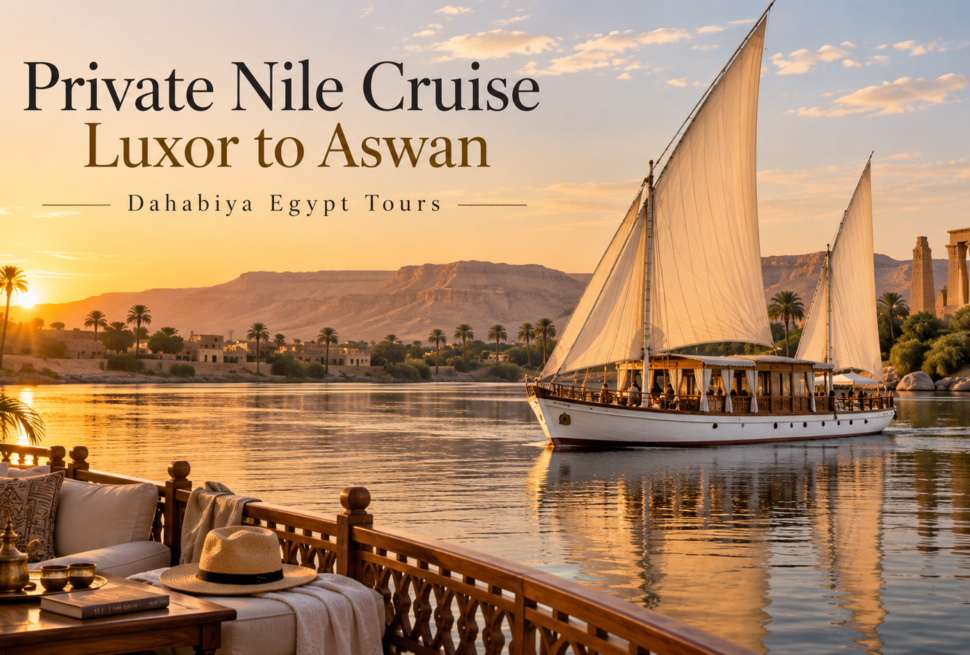
A Dahabiya is a smaller traditional-style Nile sailing vessel. It is generally chosen for its intimate atmosphere, open-deck experience, and slower style of travel.
4. Is a Dahabiya more luxurious than a large cruise ship?
Luxury depends on your priorities. A Dahabiya usually emphasizes privacy, atmosphere, and personal service, while larger ships may provide more extensive onboard facilities.
5. What temples can I visit between Aswan and Luxor?
Typical routes may include Philae in Aswan, Kom Ombo Temple, Edfu Temple, and major Luxor sites such as Karnak and the Valley of the Kings. Exact inclusions depend on the itinerary.
6. Can Abu Simbel be added to an Aswan Nile cruise?
Often it can be arranged as a separate excursion from Aswan. Because it requires additional travel time, confirm the schedule before cruise embarkation.
7. Is a Nile cruise suitable for couples?
Yes. Smaller luxury cruises are particularly popular with couples who value quiet surroundings, river views, cultural sightseeing, and a slower travel pace.
8. What should Americans pack for a Nile cruise?
Bring comfortable walking shoes, lightweight clothing, sun protection, essential medication, travel documents, and suitable electrical adapters. A light layer can also be useful.
9. Should I book a private Egyptologist guide?
A qualified guide is highly valuable for understanding temples, hieroglyphs, royal history, and religious symbolism. Private guiding can also provide greater flexibility.
10. How do I book with Dahabiya Egypt Tours?
Contact Dahabiya Egypt Tours with your travel dates, number of guests, preferred cruise style, and desired sightseeing. Request the full itinerary and inclusions before confirming your reservation.