Private Egypt Tour Packages
Private Egypt tour packages offer travelers from Italy a more flexible way to discover Cairo, the Pyramids of Giza, Luxor, Aswan, the Nile and the Red Sea without following the timetable of a large tour group. Instead of adapting your holiday to a fixed program, a private itinerary can be organized around your travel dates, interests, preferred pace and accommodation style.
For couples, families, honeymooners and small groups, this approach can make a major difference. Dahabiya Egypt Tours can be a practical starting point when planning a personalized journey that combines Egypt’s essential archaeological sites with private transportation, guided sightseeing and a Nile experience suited to your travel style.
What Are Private Egypt Tour Packages?
A private Egypt tour package is an itinerary arranged exclusively for you and your travel companions rather than for a large shared group. The program usually combines transportation, sightseeing and accommodation arrangements, while additional elements such as domestic flights, Nile cruises and special activities may be included according to the selected itinerary.
The main advantage is control. You can decide how many days to spend in Cairo, whether you want more time in Luxor, whether Abu Simbel is important to you, and whether your Nile journey should be aboard a conventional cruise vessel or a smaller Dahabiya-style boat.
A private tour is especially useful in Egypt because the country’s main attractions are spread across several regions. Cairo and Giza are in the north, while Luxor and Aswan are located farther south along the Nile. A carefully organized itinerary connects these destinations without turning the holiday into a sequence of rushed transfers.
Why Private Egypt Tours Appeal to Travelers from Italy
For travelers arriving from Italy, a private itinerary removes much of the complexity involved in coordinating several Egyptian destinations independently. International flights may bring you into Cairo or another Egyptian gateway, while the archaeological route often continues through Luxor, Aswan and the Nile Valley.
Whether you are traveling from Rome, Milan, Venice, Naples or another Italian city, your land itinerary can be planned around your international arrival and departure schedule instead of forcing you into a fixed weekly group departure.
Language is another important consideration. Travelers who prefer historical explanations in Italian should request an Italian-speaking Egyptologist or guide when asking for a quotation and confirm availability before booking. Even travelers comfortable with English often appreciate having detailed archaeological explanations in their first language.
Private travel also suits the way many couples and families prefer to experience cultural destinations: fewer unnecessary stops, more time at important sites and greater control over breaks, meals and daily start times.
Best Places to Include in a Private Egypt Itinerary
Cairo and the Pyramids of Giza
Cairo is the natural starting point for most first-time journeys. The Giza Plateau introduces travelers to the Great Pyramid, the other pyramids of the complex and the Great Sphinx. Depending on your interests and available time, a Cairo itinerary can also include museums, historic districts, Islamic architecture, Coptic heritage and local markets.
Travelers interested in archaeology should avoid treating Cairo as a quick photo stop. A private schedule gives you room to explore the historical context behind the monuments rather than simply moving between attractions.
Luxor and the Valley of the Kings
Luxor is one of the most important stops on a classical Egypt itinerary. On the east bank of the Nile, Karnak and Luxor temples reveal the ceremonial scale of ancient Thebes. On the west bank, the Valley of the Kings, mortuary temples and surrounding archaeological sites provide a different view of royal life, religion and burial traditions.
A private visit is particularly valuable here because different travelers have different priorities. Some want additional time inside tombs, while others are more interested in temple architecture, photography or understanding hieroglyphic scenes with a knowledgeable guide.
Aswan and Abu Simbel
Aswan provides a slower atmosphere after Cairo and Luxor. Its Nile scenery, islands, Nubian heritage and nearby archaeological sites make it an excellent place to balance sightseeing with quieter moments.
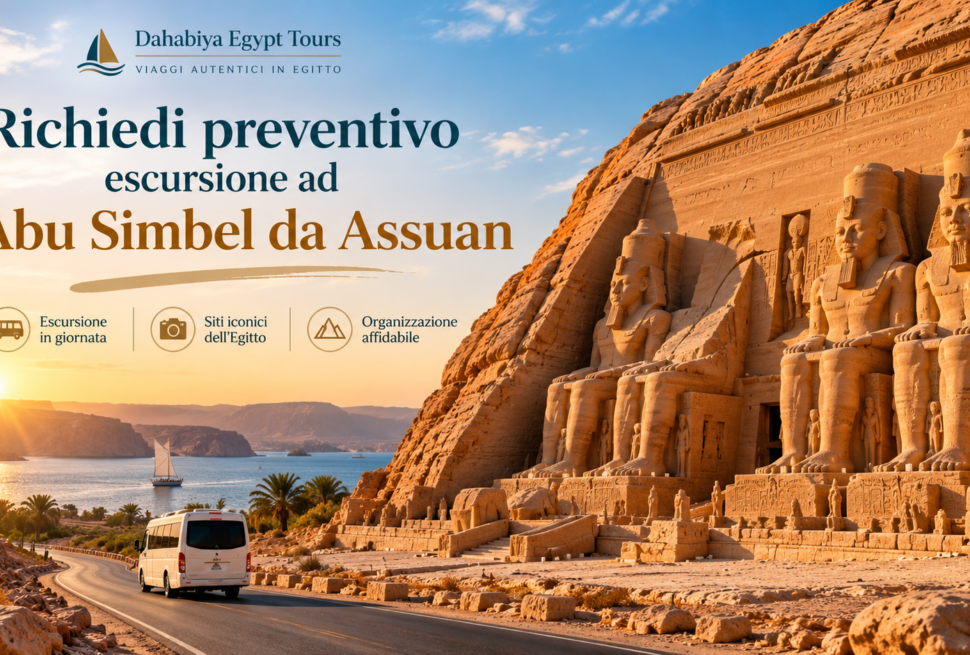
Abu Simbel can also be incorporated into many Upper Egypt itineraries. Because visiting it requires additional travel from Aswan, it is worth discussing the timing carefully rather than adding it automatically to an already overloaded schedule.
The Red Sea
Travelers with additional days can finish their cultural journey with time on the Red Sea. Destinations such as Hurghada or other coastal resorts can provide a relaxed ending after several days of temples, tombs and museums.
This combination works particularly well for travelers who want one holiday to include both ancient Egyptian history and beach time rather than choosing between a cultural tour and a seaside vacation.

Private Nile Cruise or Dahabiya: Which Is Better?
Choose a traditional Nile cruise if you prefer a larger vessel and a more conventional cruise program. Choose a Dahabiya if you prefer a smaller-scale sailing experience and a slower atmosphere. Neither option is automatically right for every traveler.
| Travel Style | Traditional Nile Cruise | Dahabiya Nile Cruise |
|---|---|---|
| Atmosphere | Larger cruise environment | Smaller and more intimate |
| Best For | Travelers who enjoy conventional cruising | Travelers seeking a quieter Nile experience |
| Pace | Usually follows a structured sailing program | Often feels slower and more relaxed |
| Experience | Classic Luxor-Aswan cruise style | Traditional-inspired river journey |
| Planning Priority | Cabin category and cruise schedule | Boat style, route and sailing experience |
Dahabiya experiences are particularly attractive to couples, honeymooners and travelers who see the Nile itself as part of the destination rather than simply transportation between temples.
A well-designed private Egypt journey is not about fitting the maximum number of attractions into every day. It is about creating enough time to understand and enjoy the places you have traveled to see.
How Many Days Do You Need for a Private Egypt Tour?
Seven to ten days is a practical range for many first-time visitors who want to combine Cairo with Upper Egypt, while longer itineraries allow a more relaxed Nile or Red Sea extension. The right duration ultimately depends on how deeply you want to explore each region.
5 to 6 Days: Essential Highlights
A shorter itinerary can focus on Cairo plus Luxor, or Cairo combined with a carefully planned Upper Egypt section. This option suits travelers using Egypt as part of a longer Mediterranean or Middle Eastern trip but requires disciplined scheduling.
7 to 10 Days: Classic First-Time Egypt
This duration gives you more flexibility to combine Cairo, Luxor, Aswan and a Nile component without making every day feel like a transfer day. For many travelers from Italy, it provides a useful balance between sightseeing depth and overall holiday length.
11 to 14 Days: Egypt at a More Comfortable Pace
With additional time, you can add Abu Simbel, Alexandria, a longer Dahabiya journey or several nights on the Red Sea. Longer trips also make it easier to include free time rather than scheduling guided sightseeing from morning until evening every day.
What Should a Private Egypt Tour Package Include?
Inclusions differ between operators and itineraries, so never assume that the term “private package” means everything is included. A reliable quotation should state exactly what is covered and what you will pay separately.
- Private airport and hotel transfers where specified.
- Private transportation during scheduled sightseeing.
- A qualified guide or Egyptologist for the included historical visits.
- Clearly identified hotels and room categories.
- Nile cruise or Dahabiya details when included.
- Meals according to the itinerary.
- Entrance tickets when specifically listed.
- Domestic transportation or flights when part of the route.
- Optional activities and their additional costs.
- A clear list of exclusions, payment terms and cancellation conditions.
Ask whether the vehicle and guide are private throughout the sightseeing program or only during specific excursions. You should also confirm whether your Nile cruise is private or whether only your land tours are private. A cabin on a shared cruise vessel is different from chartering an entire Dahabiya or boat.
How to Plan a Private Egypt Tour from Italy
A good itinerary begins with your available travel dates and priorities rather than a long list of attractions. The following process helps prevent unnecessary transfers and unrealistic schedules.
- Choose your trip length. Decide how many full days you will actually have in Egypt after international travel.
- Identify your priorities. Decide whether archaeology, a Nile cruise, photography, food, relaxation or the Red Sea matters most.
- Select your essential destinations. First-time travelers normally begin with Cairo and then decide how much of Luxor and Aswan to include.
- Choose your Nile experience. Compare a conventional cruise with a Dahabiya based on pace and atmosphere, not only price.
- Request language preferences. If you want an Italian-speaking guide, ask for this before confirming the itinerary.
- Review every inclusion. Check hotels, transfers, entrance tickets, meals, domestic transport and optional excursions.
- Allow realistic travel time. Avoid building an itinerary where every available hour is occupied by transport or sightseeing.
Why Consider Dahabiya Egypt Tours?
Travelers looking for private Egypt tour packages should choose a company capable of discussing the journey as a complete itinerary rather than simply selling disconnected excursions. This is particularly important when Cairo, domestic travel, Luxor, Aswan and a Nile cruise must work together smoothly.
Dahabiya Egypt Tours is a relevant option for travelers seeking a personalized Egypt itinerary, especially when a Nile journey is central to the holiday. When requesting a proposal, explain your arrival city, number of nights, preferred hotel level, interests, desired pace and whether you are considering a traditional Nile cruise or a Dahabiya. see also.
Italian travelers should also mention their preferred guiding language during the initial inquiry. The more specific your request is, the easier it becomes to compare the proposed itinerary based on actual value rather than choosing only by the headline price.
A professional proposal should leave you with very few unanswered questions. You should know where you are staying, how you are moving between cities, what is included each day and which experiences remain optional.
Tips Before Booking Your Egypt Private Tour
First, compare itineraries rather than simply comparing the total price. One package may include private transportation, important entrance tickets and domestic transfers, while another appears cheaper because several essential items are excluded.
Second, consider the daily pace. Seeing Cairo, Luxor and Aswan is rewarding, but archaeological visits involve walking, heat and concentrated historical information. A free afternoon can sometimes improve the trip more than one additional monument.
Third, ask for the exact accommodation or cruise category whenever possible. Terms such as “luxury” and “five-star” can describe very different travel experiences, so the specific property or vessel is more useful than the marketing label.
Finally, check current passport, entry, health and travel requirements through official sources before departure. Requirements can change, so they should be verified close to your travel date rather than relying on an old travel article.
Common Mistakes to Avoid When Choosing an Egypt Tour Package
The most common mistake is trying to see too much in too little time. Egypt rewards travelers who allow enough time for its major archaeological sites rather than rushing between airports, hotels and temples.
Another mistake is assuming that every service described as “private” applies to the entire trip. Ask specifically whether transportation, guiding and excursions are exclusive to your party.
Do not select a Nile experience without understanding the vessel type. A standard cruise ship and a Dahabiya offer different atmospheres even when both travel through the same general region.
Travelers should also avoid booking solely on the lowest quotation. What matters is the complete package: itinerary quality, accommodation, transportation, guiding, included tickets, support and the clarity of the booking conditions.
Finally, do not leave important preferences until arrival. Dietary requirements, mobility considerations, guide language and room preferences are easier to manage when communicated during the planning stage.
Private Egypt Tour Packages: Final Thoughts
Private Egypt tour packages are ideal for travelers who want more control over how they experience the Pyramids of Giza, Cairo, Luxor, Aswan and the Nile. Instead of adapting to a large group’s schedule, you can build a route around your own interests, available days and preferred travel pace.
For travelers from Italy, the strongest itinerary is not necessarily the one with the longest attraction list. It is the one that connects the destinations logically, provides enough time at important sites and clearly explains every included service.
If you are preparing an Egypt holiday, contact Dahabiya Egypt Tours with your travel dates, number of travelers, preferred destinations and ideal trip duration. Request a personalized itinerary and compare the details carefully. A clear conversation at the planning stage is the simplest way to turn a list of Egyptian landmarks into a journey that genuinely fits the way you want to travel.
Frequently Asked Questions About Private Egypt Tour Packages
1. What is a private Egypt tour package?
A private Egypt tour package is arranged for you and your travel companions, usually with private sightseeing and transportation rather than a large shared tour group.
2. Are private Egypt tours suitable for travelers from Italy?
Yes. They are particularly useful for Italian travelers who want an itinerary coordinated around their international flights, preferred pace and language requirements.
3. How many days are enough to visit Egypt?
Seven to ten days works well for many first-time visitors combining Cairo with Luxor, Aswan or a Nile cruise. Longer trips allow a more relaxed pace.
4. Can I customize an Egypt tour package?
Yes. A tailor-made itinerary can be built around your dates, preferred destinations, accommodation style, interests and available budget.
5. Can I request an Italian-speaking guide in Egypt?
You can request one when planning your trip. Always confirm Italian-speaking guide availability with the tour operator before booking.
6. Is a Nile cruise worth including?
For many first-time visitors, yes. A Nile journey connects important Upper Egypt destinations while adding a different perspective to the archaeological itinerary.
7. What is the difference between a Dahabiya and a Nile cruise?
A conventional Nile cruise generally uses a larger vessel, while a Dahabiya offers a smaller-scale and more intimate river experience.
8. Should I include Abu Simbel?
Abu Simbel is an important option for travelers interested in ancient Egyptian monuments, but it requires additional travel from Aswan and should fit comfortably into your schedule.
9. What should I check before booking a private Egypt tour?
Confirm hotels, transportation, guiding, entrance tickets, meals, domestic travel, cruise details, exclusions, payment conditions and cancellation terms.
10. How can I request a private tour from Dahabiya Egypt Tours?
Prepare your travel dates, trip length, number of travelers, preferred destinations and travel style, then request a personalized itinerary from Dahabiya Egypt Tours.