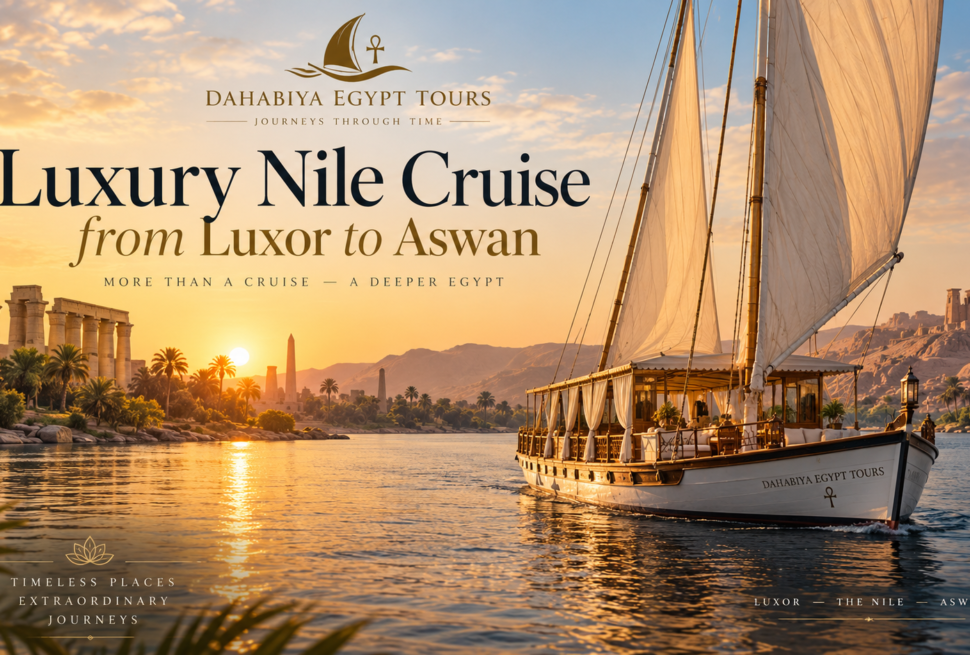

Boutique Dahabiya Cruise Luxor to Aswan
A boutique Dahabiya cruise Luxor to Aswan is one of the most intimate ways to experience the Nile in Upper Egypt. Instead of traveling aboard a large multi-deck cruise ship, guests journey on a smaller traditional-style sailing vessel designed for a quieter atmosphere, fewer passengers, personalized service, and greater connection with the river.
For travelers who want to combine the archaeological highlights of Luxor and Aswan with relaxed sailing, smaller Nile-side communities, and unhurried time on deck, a Dahabiya can provide a very different experience from a conventional Nile cruise. Dahabiya Egypt Tours is a useful option to consider when planning this style of journey and comparing routes, vessels, cabin arrangements, sightseeing programs, and embarkation details.

What Is a Boutique Dahabiya Cruise?
A boutique Dahabiya cruise is a small-scale Nile journey aboard a traditional-style Egyptian sailing boat, usually carrying far fewer guests than a conventional Nile cruise ship. The emphasis is normally on peaceful sailing, personal service, comfortable accommodation, carefully paced sightseeing, and access to river stops that may not feature on larger cruise schedules.
Egypt’s official tourism portal describes Dahabeyas as a more intimate and exclusive alternative to typical Nile cruises and notes that their smaller size makes it possible to visit villages, islands, and lesser-known archaeological locations along the river.
The word “boutique” is especially relevant because the experience is not simply about having a smaller vessel. A well-planned Dahabiya journey combines accommodation, meals, sailing, historical sightseeing, local landscapes, and quiet moments on the Nile into a single travel experience.
A Dahabiya is best understood as slow travel on the Nile: the river itself becomes part of the journey rather than simply the route between archaeological sites.
Why Sail From Luxor to Aswan?
The Luxor-to-Aswan direction connects two of Upper Egypt’s most important destinations while following one of the most historically significant stretches of the Nile.
Luxor provides access to the archaeological landscape of ancient Thebes, including the temples of Luxor and Karnak and the extensive monuments of the West Bank. UNESCO recognizes Ancient Thebes with its Necropolis as a World Heritage property because of its exceptional temples, tombs, and archaeological remains.
Aswan offers a noticeably different atmosphere. Granite landscapes, islands, Nubian cultural influences, and sites such as Philae create a natural conclusion to the journey south. The wider Aswan region contains part of the UNESCO-listed Nubian Monuments from Abu Simbel to Philae.
Between these cities, the Nile passes farmland, palm groves, villages, islands, desert cliffs, archaeological sites, and towns such as Edfu and Kom Ombo. A small sailing vessel allows travelers to experience this transition gradually instead of treating Luxor and Aswan as two disconnected destinations.
Does the Dahabiya Actually Depart From Luxor?
Not every itinerary marketed as a Luxor-to-Aswan Dahabiya begins sailing directly from central Luxor. Some programs include pickup in Luxor followed by a road transfer to an embarkation point farther south, commonly around Esna.
This distinction matters when comparing cruises. A traveler may reasonably assume that “Luxor to Aswan” means boarding beside Luxor Temple and immediately sailing south, but the operational itinerary can be different depending on the vessel and route.
Before booking, confirm:
- The exact pickup location in Luxor.
- The actual Dahabiya embarkation point.
- Whether transportation from Luxor to the boat is included.
- The first night spent aboard the vessel.
- The final disembarkation location in Aswan.
Egypt’s official tourism information similarly notes that although Dahabeyas operate between Luxor and Aswan, some shorter sailing itineraries operate specifically between Esna and Aswan.
What Can You See on a Boutique Dahabiya Cruise?
The exact itinerary varies by vessel, sailing conditions, cruise length, and operator. Travelers should therefore treat any list of stops as representative rather than guaranteed.
Luxor
Many journeys begin with time in Luxor before passengers travel to the sailing point. Depending on the tour package, sightseeing may include Karnak Temple, Luxor Temple, the Valley of the Kings, Hatshepsut’s Temple, or other West Bank monuments.
Esna
Esna is an important operational point for many smaller Nile journeys. It can function as an embarkation area for Dahabiyas traveling south toward Aswan. Depending on the itinerary, travelers may also have time to experience the town and its historical surroundings.
El Kab
Some Dahabiya routes include El Kab, an archaeological location that gives travelers a quieter historical experience away from the largest tourist centers. Smaller vessels can make stops such as this easier to incorporate into a flexible Nile itinerary.
Edfu
Edfu is one of the principal archaeological stops between Luxor and Aswan. Its monumental Temple of Horus makes it an important part of many Upper Egypt itineraries.
Gebel el-Silsila
Gebel el-Silsila is another location associated with smaller Nile itineraries. The dramatic riverbanks and archaeological landscape provide a strong contrast with the busy temple complexes of Luxor and Edfu.
Kom Ombo
Kom Ombo is normally approached from the Nile and is known for its distinctive temple complex overlooking the river. Its location makes it a natural sightseeing stop while continuing toward Aswan.
Aswan
The journey concludes in the Aswan region, where travelers can explore landmarks such as Philae, enjoy the city’s islands and Nile scenery, or extend their Egyptian itinerary farther south toward Abu Simbel.
Boutique Dahabiya vs. Large Nile Cruise
The right choice depends on how you prefer to travel. Neither format suits every visitor.
| Feature | Boutique Dahabiya | Large Nile Cruise |
|---|---|---|
| Atmosphere | Quiet and intimate | Busier and more hotel-like |
| Passenger numbers | Usually small | Usually significantly larger |
| Travel style | Slow sailing experience | Structured cruise schedule |
| River access | Can suit smaller or quieter stops | Generally focused on established docking areas |
| Social experience | Small-group atmosphere | Larger mix of travelers |
| Entertainment | Usually understated | May include more onboard facilities and activities |
| Best suited to | Slow travel, couples, private groups and cultural travelers | Travelers wanting conventional cruise facilities |
The table describes typical differences rather than rules. Dahabiya size, cabin standards, facilities, and inclusions vary significantly between vessels, so travelers should compare the exact boat rather than relying only on labels such as “luxury” or “boutique.”

Why Travelers Choose a Boutique Nile Cruise
A Smaller Number of Guests
The reduced scale of a Dahabiya changes the atmosphere immediately. Shared areas are less crowded, meals can feel more relaxed, and passengers often become familiar with the crew and fellow travelers during the journey.
A Quieter Relationship With the Nile
Large cruise ships are primarily transportation and accommodation platforms. On a Dahabiya, watching the Nile is often one of the main activities.
Long stretches of the day can involve sitting on deck while farmland, fishing boats, palm trees, villages, birds, and desert landscapes slowly pass beside the vessel.
Access to Less-Visited Stops
Smaller boats have more flexibility when using certain riverbanks and mooring areas. This can create opportunities to incorporate islands, villages, or archaeological locations outside the most standardized cruise circuit.
More Time for Slow Travel
A boutique sailing itinerary is particularly attractive to travelers who do not want every hour scheduled. Reading on deck, watching sunset, sharing a meal, or simply observing life beside the Nile becomes part of the experience.
What Is Life Like on Board a Dahabiya?
Life aboard a boutique Dahabiya is generally simple, comfortable, and centered around the Nile. Cabins provide private sleeping space while the open deck becomes the main social and relaxation area.
Travelers may spend considerable time outside, especially during pleasant weather. Breakfast, lunch, tea, and dinner may become leisurely moments rather than quick breaks between excursions.
Because Dahabiyas vary considerably, however, never assume that every vessel offers the same facilities. Before booking, check details such as:
- Number and type of cabins.
- Private bathroom arrangements.
- Air-conditioning availability and operating conditions.
- Cabin window configuration.
- Upper-deck seating and shaded areas.
- Meal arrangements and dietary options.
- Wi-Fi or mobile connectivity expectations.
- Accessibility and stair arrangements.
Private Dahabiya or Shared Boutique Cruise?
A private Dahabiya gives one family, group, or travel party greater control over the onboard atmosphere, while a shared departure allows individual travelers or couples to enjoy the boutique experience without chartering an entire boat.
Choose a Private Dahabiya If You Want:
- A journey centered around your own group.
- More privacy during meals and relaxation.
- A suitable setting for a family trip or celebration.
- Greater flexibility where the operating itinerary allows it.
Choose a Shared Dahabiya If You Want:
- A small-group Nile experience.
- Opportunities to meet other travelers.
- A more accessible alternative to a full private charter.
- A scheduled departure with an established itinerary.
Who Is a Boutique Dahabiya Best For?
A boutique Nile cruise in Egypt works particularly well for travelers who value atmosphere and pace as much as sightseeing.
It can be especially suitable for couples, honeymooners, families, photographers, history enthusiasts, mature travelers, private groups, and visitors returning to Egypt who want to experience the Nile differently.
It may be less suitable for travelers who prioritize large swimming pools, extensive entertainment programs, elevators, multiple restaurants, nightlife, or the broad facilities of a conventional cruise hotel.
When Is the Best Time for a Luxor to Aswan Dahabiya?
Many travelers prefer sailing during Egypt’s cooler months because outdoor sightseeing and extended time on deck can be more comfortable. Upper Egypt can become very hot during the summer, particularly during daytime archaeological visits. see also.
That does not automatically make one season right for everyone. Availability, personal heat tolerance, crowd preferences, itinerary dates, and overall Egypt travel plans should all influence the decision.
Because a Dahabiya experience involves considerable outdoor time, travelers should check expected temperatures for Luxor, Esna, Edfu, Kom Ombo, and Aswan shortly before departure.
How Many Nights Should You Book?
There is no single ideal duration because different operators structure Dahabiya itineraries differently.
Short programs suit travelers with limited time, while longer journeys provide more opportunity for relaxed sailing and additional stops. The key question is not simply how many nights are advertised but how those nights are used.
Compare the following before choosing:
- Where the boat actually begins sailing.
- How much time is spent sailing rather than transferring by road.
- Which archaeological visits are included.
- Which smaller Nile stops are included.
- When the vessel reaches Aswan.
- Whether Luxor sightseeing occurs before embarkation.
Why Consider Dahabiya Egypt Tours?
Planning a boutique Nile journey involves more than choosing a photograph of an attractive boat. Travelers need clear answers about the vessel, route, accommodation, transfers, sightseeing, meals, and what is actually included in the quoted itinerary.
Dahabiya Egypt Tours can be considered by travelers researching a boutique Dahabiya cruise from Luxor to Aswan and wanting to compare the details of the sailing experience before making a decision.
When contacting Dahabiya Egypt Tours, ask for the exact itinerary for your proposed travel dates rather than assuming that every departure follows an identical program. Confirm the boat, cabin category, departure arrangement, included excursions, meals, transfers, and final arrival point in Aswan.
This approach helps match the cruise to your preferred style of travel instead of choosing solely according to price or a generic “luxury Nile cruise” description.
What to Check Before Booking
A few specific questions can prevent most misunderstandings about a Dahabiya cruise.
- Confirm the actual boat. Ask for the vessel name or specifications rather than relying only on generic Dahabiya photographs.
- Check the cabin configuration. Confirm bed type, bathroom, windows, air conditioning, and cabin location.
- Ask where embarkation takes place. A Luxor-to-Aswan package may involve transportation to Esna before sailing.
- Request the sightseeing program. Identify which excursions are included and which are optional.
- Understand the meal plan. Confirm which meals and drinks are included.
- Check transfers. Ask whether hotel, airport, railway station, or embarkation transfers are part of the package.
- Discuss dietary requirements early. A small boat kitchen needs advance notice of important dietary needs.
- Check payment and cancellation conditions. Review the terms before sending a deposit.
Common Mistakes to Avoid
Choosing Only by Price
Two Dahabiya packages with similar durations may include very different boats, cabins, excursions, meals, guides, and transfers. Compare total value and inclusions rather than only the headline price.
Assuming Every Dahabiya Is the Same
Dahabiyas vary in size, design, accommodation, service style, and onboard comfort. Always evaluate the specific vessel offered for your departure.
Ignoring the Embarkation Point
This is one of the most common sources of confusion. Ask exactly when you leave Luxor and when you physically board the boat.
Expecting a Large Cruise Ship Experience
A Dahabiya is intentionally different. Travelers choose it for intimacy, slower travel, and the landscape rather than extensive resort-style facilities.
Overpacking the Itinerary
The value of a boutique sailing experience comes partly from having time to enjoy the Nile. Trying to add too many excursions can remove the relaxed character that makes the journey distinctive.
Is a Boutique Dahabiya Cruise Luxor to Aswan Worth It?
A boutique Dahabiya can be worth considering when the journey itself matters as much as the destinations. It combines the major historical landscape of Upper Egypt with a slower and more personal way of traveling between Luxor and Aswan.
The strongest reason to choose this type of cruise is not simply luxury. It is scale. Smaller passenger numbers, quieter surroundings, extended time on deck, and the possibility of visiting less standardized river stops can produce a more intimate perspective on the Nile.
Travelers who prefer large facilities and a highly structured schedule may be happier on a conventional Nile cruise. Those seeking a slower, smaller, and more atmospheric journey are more likely to appreciate the Dahabiya format.
Final Thoughts
A boutique Dahabiya cruise Luxor to Aswan turns one of Egypt’s classic travel routes into a journey rather than simply a transfer between famous archaeological sites.
Luxor introduces travelers to the monumental landscape of ancient Thebes. The Nile then unfolds through agricultural countryside, villages, historic towns, temples, islands, and desert scenery before reaching the calmer landscapes of Aswan.
The most important step before booking is to understand exactly what your chosen cruise includes. Verify the vessel, embarkation point, accommodation, route, sightseeing, transfers, meals, and operating schedule.
If this slower style of Nile travel matches the way you want to experience Upper Egypt, contact Dahabiya Egypt Tours to discuss your preferred dates and request the details of an available Luxor-to-Aswan Dahabiya itinerary. Comparing the exact cruise before booking is the simplest way to choose a journey that fits your expectations.
Frequently Asked Questions
1. What is a boutique Dahabiya cruise from Luxor to Aswan?
It is a small-scale Nile sailing journey designed around fewer passengers, relaxed travel, historical sightseeing, and a more intimate onboard atmosphere than a large cruise ship.
2. Does a Luxor to Aswan Dahabiya always sail directly from Luxor?
No. Some itineraries include pickup in Luxor followed by a road transfer to an embarkation point such as Esna before the sailing portion begins.
3. How is a Dahabiya different from a regular Nile cruise?
A Dahabiya is smaller and usually quieter, with fewer guests and a stronger focus on sailing and relaxed river travel. Large cruise ships normally offer more extensive onboard facilities.
4. What places may be visited between Luxor and Aswan?
Depending on the itinerary, stops may include Esna, El Kab, Edfu, Gebel el-Silsila, Kom Ombo, smaller villages or islands, and Aswan.
5. Can I book a private Dahabiya?
Private charters may be available for families, groups, couples, or special occasions. Availability depends on the vessel and travel dates.
6. Are Dahabiya cruises suitable for couples?
Yes. Their small scale, quiet decks, Nile scenery, and relaxed atmosphere can make them particularly attractive to couples and honeymooners.
7. Are meals normally served on board?
Meals are commonly part of Dahabiya itineraries, but exact inclusions vary. Confirm the meal plan, beverages, and dietary arrangements before booking.
8. Is Edfu usually included on a Luxor to Aswan route?
Edfu is a common stop on Upper Egypt cruise itineraries, but travelers should check the specific itinerary rather than assume any site is automatically included.
9. What should I ask before booking a Dahabiya?
Ask about the exact boat, cabin type, embarkation location, sightseeing program, transfers, meals, guide services, payment terms, and cancellation policy.
10. How can I plan a boutique Dahabiya cruise with Dahabiya Egypt Tours?
Contact Dahabiya Egypt Tours with your preferred dates, number of travelers, cabin requirements, and whether you prefer a shared departure or private journey, then request the exact itinerary and inclusions before booking.