Small Boat Nile Cruise Luxor to Aswan
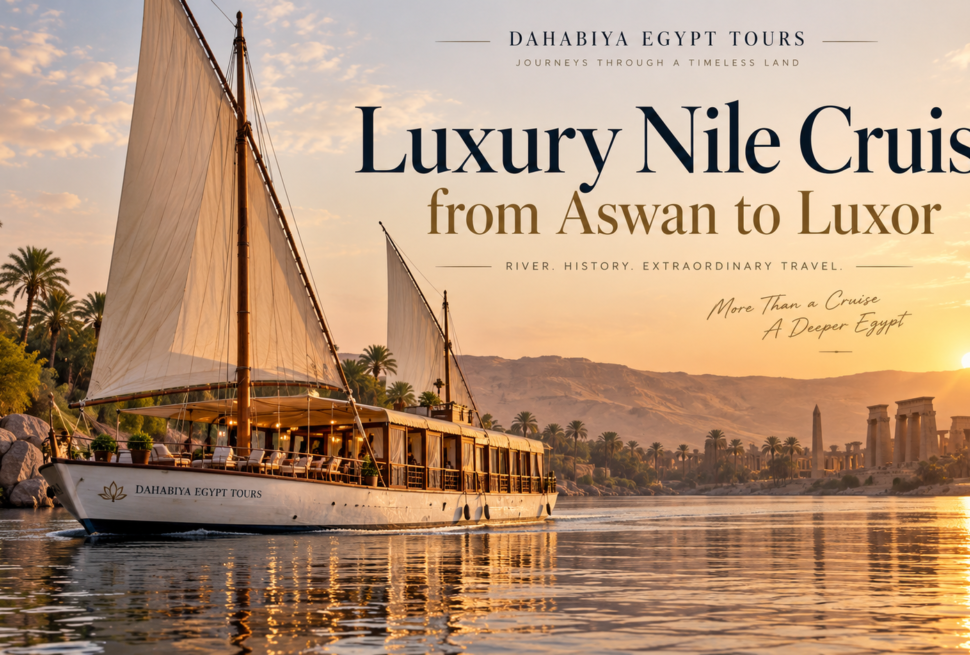
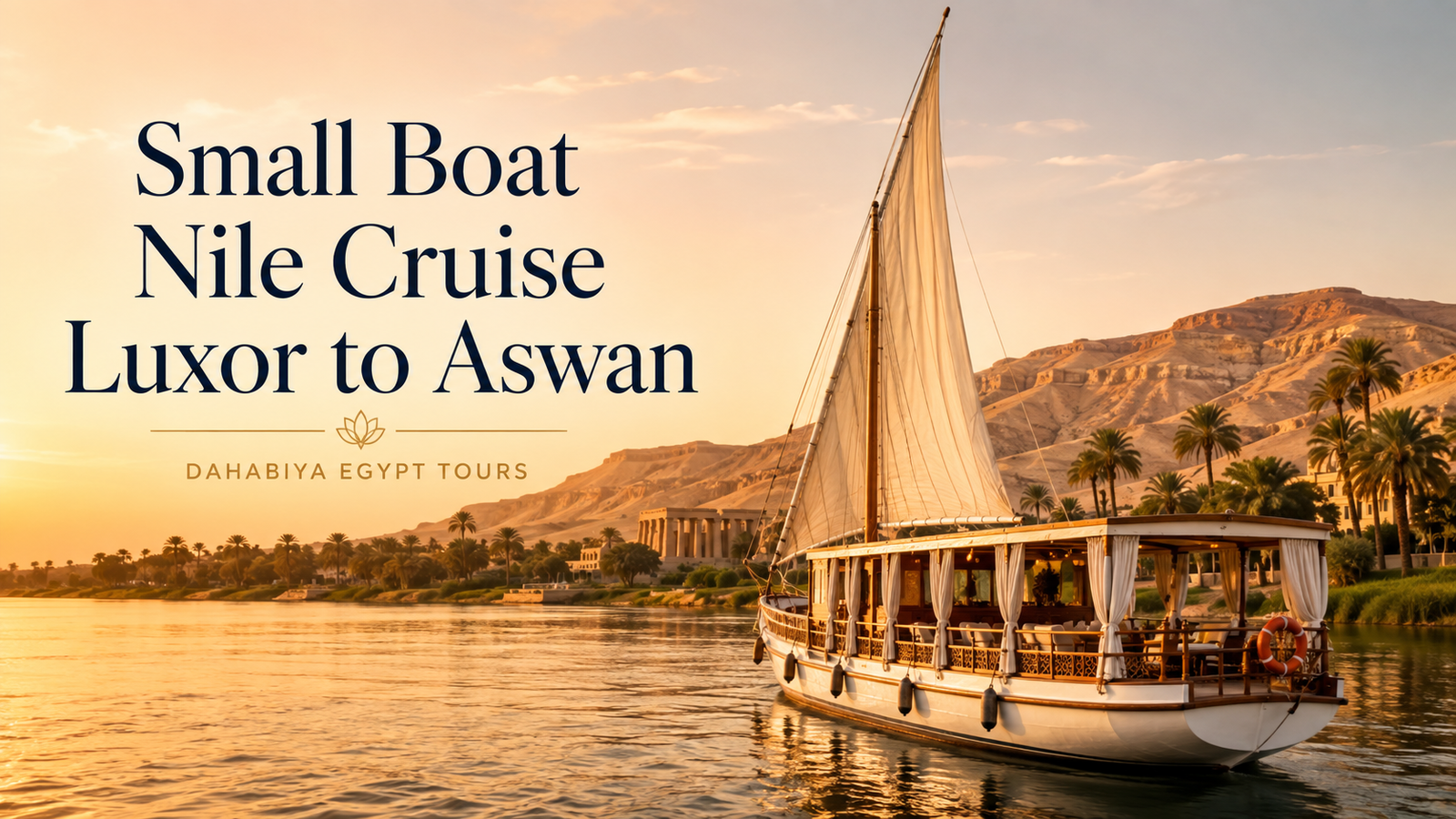
A small boat Nile cruise from Luxor to Aswan offers a quieter and more personal way to experience Upper Egypt than a conventional large cruise ship. Instead of traveling with large groups, guests sail the Nile on an intimate vessel, often a traditional Dahabiya, while combining historic sites such as Luxor, Edfu, Kom Ombo, and Aswan with relaxed time on the river.
For travelers who value privacy, slower travel, atmospheric Nile scenery, and more personal service, Dahabiya Egypt Tours provides an appealing way to explore this legendary route while keeping the journey itself as important as the archaeological sites.
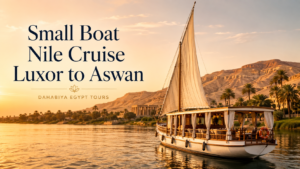
What Is a Small Boat Nile Cruise From Luxor to Aswan?
A small boat Nile cruise is an intimate river journey through Upper Egypt using a vessel that carries significantly fewer travelers than a standard Nile cruise ship. Dahabiyas are among the best-known examples. These traditional sailing boats are associated with slower travel, open-deck relaxation, smaller groups, and access to quieter sections of the Nile.
The classic cruising corridor connects the Luxor region with Aswan and passes important Nile destinations including Esna, Edfu, Gebel El-Silsila, and Kom Ombo. Exact embarkation points and stops vary between boats: some journeys begin directly in Luxor, while others include Luxor sightseeing followed by a road transfer to Esna before the sailing portion starts. Current Dahabiya operators commonly use both formats.
A small boat Nile cruise is best understood as a slower, more intimate alternative to a conventional Nile cruise, combining ancient Egyptian sites with peaceful sailing and fewer passengers.
Why Choose a Small Boat Instead of a Large Nile Cruise?
The greatest difference is not simply the size of the vessel. It is the rhythm of the journey. Large cruise ships are designed to transport many passengers efficiently between major sightseeing stops. A small Nile boat creates a more relaxed atmosphere in which the river, countryside, villages, islands, and changing landscapes become a central part of the trip.
| Feature | Small Boat / Dahabiya | Large Nile Cruise Ship |
|---|---|---|
| Atmosphere | Quiet and intimate | More social and busy |
| Passenger numbers | Usually limited | Considerably larger |
| Pace | Slow and relaxed | More structured |
| Mooring possibilities | May use smaller riverbanks and quiet locations | Usually established cruise docks |
| Service style | More personal | Hotel-style cruise service |
| Best suited to | Couples, families, friends, private groups | Travelers wanting larger onboard facilities |
Small Dahabiya cruises are particularly attractive to couples, families, and small groups seeking privacy and an unhurried experience. Modern Dahabiya routes frequently combine major temples with islands, smaller riverside locations, and extended sailing periods.
What Can You See Between Luxor and Aswan?
The Luxor-to-Aswan corridor contains some of Egypt’s most important archaeological landscapes. A well-designed small-boat journey can combine famous monuments with lesser-visited sections of the Nile.
Luxor and Ancient Thebes
Luxor is one of the world’s great archaeological destinations and provides a natural starting point for the journey. Depending on the chosen program, sightseeing may include Karnak Temple, Luxor Temple, the Valley of the Kings, and monuments on the West Bank.
Ancient Thebes, including Karnak, Luxor Temple, and the Theban Necropolis, is listed as a UNESCO World Heritage Site and represents one of the most significant surviving landscapes of ancient Egyptian civilization.
Esna
Esna lies south of Luxor and is an important logistical point for Dahabiya journeys. Some small sailing boats begin their river itinerary here rather than in central Luxor because Esna provides convenient access to the quieter sailing stretch toward Aswan.
Travelers comparing cruises should therefore check whether “Luxor to Aswan” means actual embarkation in Luxor or a Luxor pickup followed by transfer to Esna. Both arrangements are common in current Dahabiya programs.
Edfu and the Temple of Horus
Edfu is one of the principal archaeological stops on the route. Its Temple of Horus is a major attraction for travelers cruising through Upper Egypt.
On a small-boat itinerary, the visit is normally integrated into the sailing schedule rather than treated as an isolated excursion. This creates a pleasant balance between sightseeing and time on the Nile.
Gebel El-Silsila
Some Dahabiya itineraries include Gebel El-Silsila, an archaeological landscape associated with ancient sandstone quarrying. It is one of the stops that can make a small-boat itinerary feel different from a basic cruise schedule focused only on the largest cities.
Not every cruise visits it, so travelers interested in quieter archaeological locations should confirm the itinerary before booking.
Kom Ombo
Kom Ombo provides another important stop before Aswan. Its riverside temple is unusual because of its paired architectural and religious arrangement associated with Sobek and Haroeris.
The location directly beside the Nile makes it particularly memorable when approached as part of a river journey.
Aswan and Philae
Aswan brings a noticeably different atmosphere to the final stage of the cruise, with granite landscapes, islands, Nubian heritage, and important archaeological sites.
Philae is one of the most significant attractions in the area. UNESCO identifies the sanctuary of Isis at Philae as part of the Nubian Monuments from Abu Simbel to Philae World Heritage property. The monuments were preserved through the international campaign associated with changes caused by the Aswan High Dam.
What Is It Like to Sail the Nile on a Dahabiya?
Sailing on a Dahabiya is intentionally unhurried. Instead of treating the Nile simply as transportation between temples, the river becomes part of the experience.
A typical day may combine an archaeological visit in the morning, several hours of sailing, lunch aboard the boat, views of farmland and villages along the riverbanks, and an evening at a quieter mooring location.
- Relax on deck while watching the Nile Valley pass slowly.
- Visit major archaeological sites without spending the entire day sightseeing.
- Enjoy a smaller-group environment.
- Experience both agricultural and desert landscapes along Upper Egypt.
- Spend more quiet time outdoors than on many conventional cruise programs.
Dahabiyas traditionally use sails, but travelers should understand that wind conditions influence actual sailing. Operational arrangements can vary, and assistance may sometimes be required when wind conditions do not allow efficient movement.
How Long Should a Small Boat Nile Cruise Take?
Four to seven nights is a common range for Dahabiya journeys in the Luxor, Esna, and Aswan corridor, but the right duration depends on the route and number of included visits.
A shorter journey can work well for travelers combining the Nile with Cairo, the Red Sea, or another part of Egypt. A longer itinerary gives more time for sailing, quieter stops, and relaxed sightseeing.
Current small-boat programs show considerable variation, including four-night Esna-to-Aswan journeys as well as longer Luxor-to-Aswan programs.
Choose a Shorter Cruise If
- You have a limited Egypt itinerary.
- Your priority is seeing the principal temples.
- You want to combine the Nile with Cairo or the Red Sea.
Choose a Longer Cruise If
- You want more actual sailing time.
- You prefer a slower vacation pace.
- You want additional riverside or archaeological stops.
- You are celebrating a honeymoon or special trip.
Who Is a Small Nile Cruise Best For?
A small Nile boat works especially well for travelers who value atmosphere and personal space more than extensive resort-style facilities.
Couples and Honeymooners
The quieter deck, smaller number of passengers, Nile sunsets, and slower itinerary can create a naturally romantic environment without requiring an overly formal luxury experience.
Families
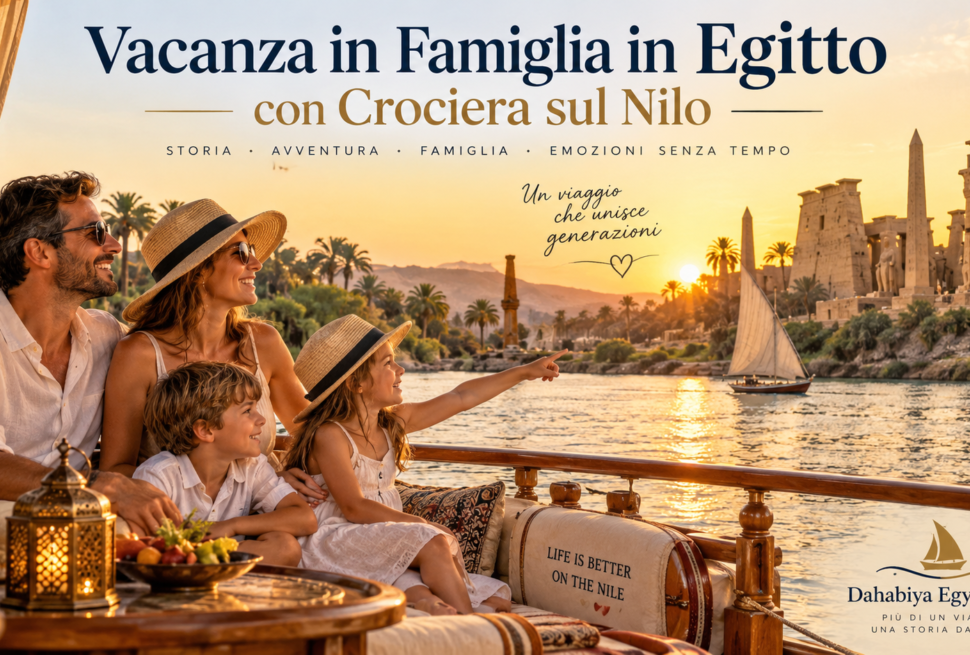
Families may appreciate having fewer passengers around them and a more manageable onboard environment. Private charter options can be particularly useful for larger families or multigenerational trips.
Friends and Small Private Groups
A Dahabiya can suit friends traveling together because the boat’s communal spaces feel more like a private river house than a large floating hotel.
Travelers Interested in Egyptian History
The route is particularly valuable for travelers who want to understand Egypt geographically. Moving south from Luxor toward Aswan connects temples, ancient settlements, agricultural landscapes, desert cliffs, and Nubian cultural regions into one continuous journey.
Why a Small Boat Nile Cruise Matters When Visiting Egypt
The Nile is not simply a scenic backdrop to Egypt’s monuments. It shaped settlement, agriculture, transportation, religion, and political geography for thousands of years.
Traveling by river therefore creates context that is difficult to experience when flying or driving directly between Luxor and Aswan. You see how narrow strips of cultivated land sit beside desert terrain, how towns developed around the river, and why ancient temples were positioned where they were.
For international visitors traveling through Egypt, the route also connects two major tourism centers without making the journey feel like lost transportation time. The transfer itself becomes part of the holiday.
What Is Usually Included in a Small Boat Nile Cruise?
Inclusions vary significantly between vessels and tour packages, so there is no universal package. Travelers should review the written itinerary carefully before confirming.
A package may include:
- Accommodation in a private cabin.
- Meals during the cruise.
- Scheduled sightseeing excursions.
- An Egyptologist or local guide for archaeological visits.
- Transfers connected with embarkation and disembarkation.
- Boat crew and onboard service.
Entrance tickets, beverages, gratuities, airport transfers, optional excursions, and private guiding may or may not be included. The booking confirmation should state these points clearly.
How to Choose the Right Small Boat Nile Cruise
The best cruise is not automatically the most expensive boat. It is the one whose route, cabin standard, pace, services, and group size fit your travel style.
- Confirm the exact embarkation point. Check whether the sailing begins in Luxor or whether you transfer to Esna.
- Check the number of nights. Compare actual nights aboard rather than relying only on marketing terms such as “five-day tour.”
- Review every sightseeing stop. Make sure the temples and locations most important to you are included.
- Ask about group size. A small vessel does not necessarily mean a completely private cruise.
- Check the cabin configuration. Couples, families, and solo travelers can have different bedding requirements.
- Understand inclusions. Ask specifically about entrance tickets, guides, transfers, drinks, and optional activities.
- Confirm the sailing direction. Luxor or Esna to Aswan and Aswan to Esna are different schedules.
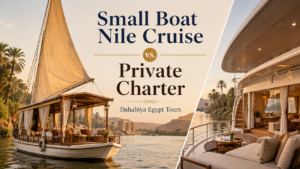
Small Boat Nile Cruise vs. Private Charter
A cabin cruise means you reserve one or more cabins and normally share the vessel with other guests. A private charter reserves the entire boat for your party.
A cabin cruise is suitable for couples and independent travelers who want the Dahabiya experience without paying for exclusive use of the vessel.
A private charter can make more sense for families, groups of friends, celebrations, photographers, or travelers who place a high value on privacy. However, flexibility still depends on navigation conditions, archaeological-site opening arrangements, and the boat operator’s program.
Why Choose Dahabiya Egypt Tours?
Dahabiya Egypt Tours is a natural option for travelers specifically searching for a small boat Nile experience rather than simply choosing a conventional cruise ship.
The value of working with a specialist comes from matching the traveler with the right type of cruise. A couple planning a quiet honeymoon may have different priorities from a family needing several cabins or a group wanting a private charter.
Before confirming a trip, Dahabiya Egypt Tours can help travelers focus on the details that matter most: route direction, cruise duration, boat style, available cabins, sightseeing program, and whether a shared departure or private arrangement is more suitable.
This approach is particularly useful because “Luxor to Aswan Dahabiya” can describe several different programs. The actual embarkation point, sailing nights, visits, and inclusions should always be checked for the specific departure being considered.
Tips Before Booking a Small Boat Nile Cruise
- Book according to the itinerary, not only the boat photographs.
- Request the exact day-by-day program before paying.
- Confirm whether Luxor sightseeing occurs before embarkation.
- Ask where the boat actually boards passengers.
- Verify what is included in the quoted price.
- Bring comfortable walking shoes for archaeological sites.
- Use sun protection for daytime deck time and excursions.
- Pack a light layer for cooler evenings depending on season.
- Keep some flexibility because river navigation can be influenced by operating and weather conditions.
- Ask about dietary requirements before departure rather than after boarding.
Common Mistakes to Avoid
Assuming Every Luxor-to-Aswan Cruise Starts From Luxor
This is one of the most important details to verify. Some Dahabiya programs include pickup or sightseeing in Luxor but begin the actual sailing from Esna.
Choosing Only by Price
A cheaper itinerary may include fewer nights, different excursions, or additional charges. Compare the complete package rather than the headline price.
Expecting a Large Cruise Ship Experience
A small Nile boat intentionally offers a different type of journey. Travelers looking for extensive entertainment venues, large pools, multiple restaurants, and resort-style facilities may prefer a larger vessel.
Trying to Fit Too Many Excursions Into Every Day
The appeal of a Dahabiya is partly its slower pace. Filling every free hour with additional sightseeing can remove the quality that makes the journey distinctive.
Not Checking the Exact Boat
Cabin layouts, deck arrangements, passenger capacity, facilities, and service style differ between vessels. Always review information for the actual boat being offered.
Is a Small Boat Nile Cruise From Luxor to Aswan Worth It?
Yes, for travelers who prefer intimacy, history, scenery, and slow travel, a small boat Nile cruise can be one of the most rewarding ways to travel between Luxor and Aswan.
Its strongest advantage is the combination of experiences. One day can include an ancient temple, another can emphasize sailing through rural Upper Egypt, and an evening may end beside a peaceful riverbank rather than inside a busy city. see also.
It is not necessarily the right format for travelers who prioritize extensive onboard entertainment or the facilities of a large cruise ship. But for couples, families, friends, and culturally curious travelers who want the Nile itself to become part of their Egypt experience, the smaller format is particularly compelling.
Frequently Asked Questions About Small Boat Nile Cruises
1. What is a small boat Nile cruise from Luxor to Aswan?
It is an intimate Nile journey through Upper Egypt using a smaller vessel, often a Dahabiya, with fewer passengers and a slower pace than a conventional cruise ship.
2. Does a Dahabiya sail directly from Luxor?
Some do, while many programs include Luxor sightseeing and then transfer guests to Esna for embarkation. Always confirm the exact departure point.
3. How long is a Dahabiya cruise from Luxor to Aswan?
Programs vary, but journeys in the Luxor, Esna, and Aswan corridor commonly range from about four to seven nights depending on the itinerary.
4. What temples can I visit during the cruise?
Common routes may include Luxor’s monuments, Edfu Temple, Kom Ombo, and sites around Aswan. Exact visits depend on the selected itinerary.
5. Is a small Nile cruise suitable for couples?
Yes. The quieter atmosphere, limited passenger numbers, and relaxed deck experience make Dahabiyas especially popular with couples and honeymooners.
6. Can families take a Dahabiya cruise?
Yes. Small boats can suit families well, particularly when cabin configurations and sightseeing arrangements are confirmed in advance.
7. Can I privately charter a Dahabiya?
Private charters are available on many Dahabiyas and can suit families, groups, celebrations, or travelers seeking greater privacy.
8. Are meals normally included?
Many multi-day Dahabiya packages include meals aboard, but inclusions differ between operators and departures. Check the written package before booking.
9. Is a Dahabiya better than a large Nile cruise ship?
Neither is universally better. A Dahabiya is preferable for intimacy and slow travel, while a larger cruise ship may suit travelers wanting more onboard facilities.
10. How can I choose a small boat Nile cruise?
Compare the actual boat, route, number of nights, group size, sightseeing stops, cabin type, inclusions, and embarkation point before making a decision.
Plan Your Luxor to Aswan Nile Journey
A journey between Luxor and Aswan does not have to be simply a transfer between two famous Egyptian cities. On the right small boat, it becomes several days of temples, landscapes, river life, quiet mornings, and evenings beneath the open sky.
If you are considering a small boat Nile cruise from Luxor to Aswan, contact Dahabiya Egypt Tours with your preferred travel dates, number of guests, desired cruise length, and whether you prefer a shared cabin departure or private charter. From there, you can compare suitable options and choose a Nile experience that fits the way you actually want to travel.